
DEEP DIVE
Life Expectancy Is Falling for the “Forgotten Middle”
By Tamara Straus
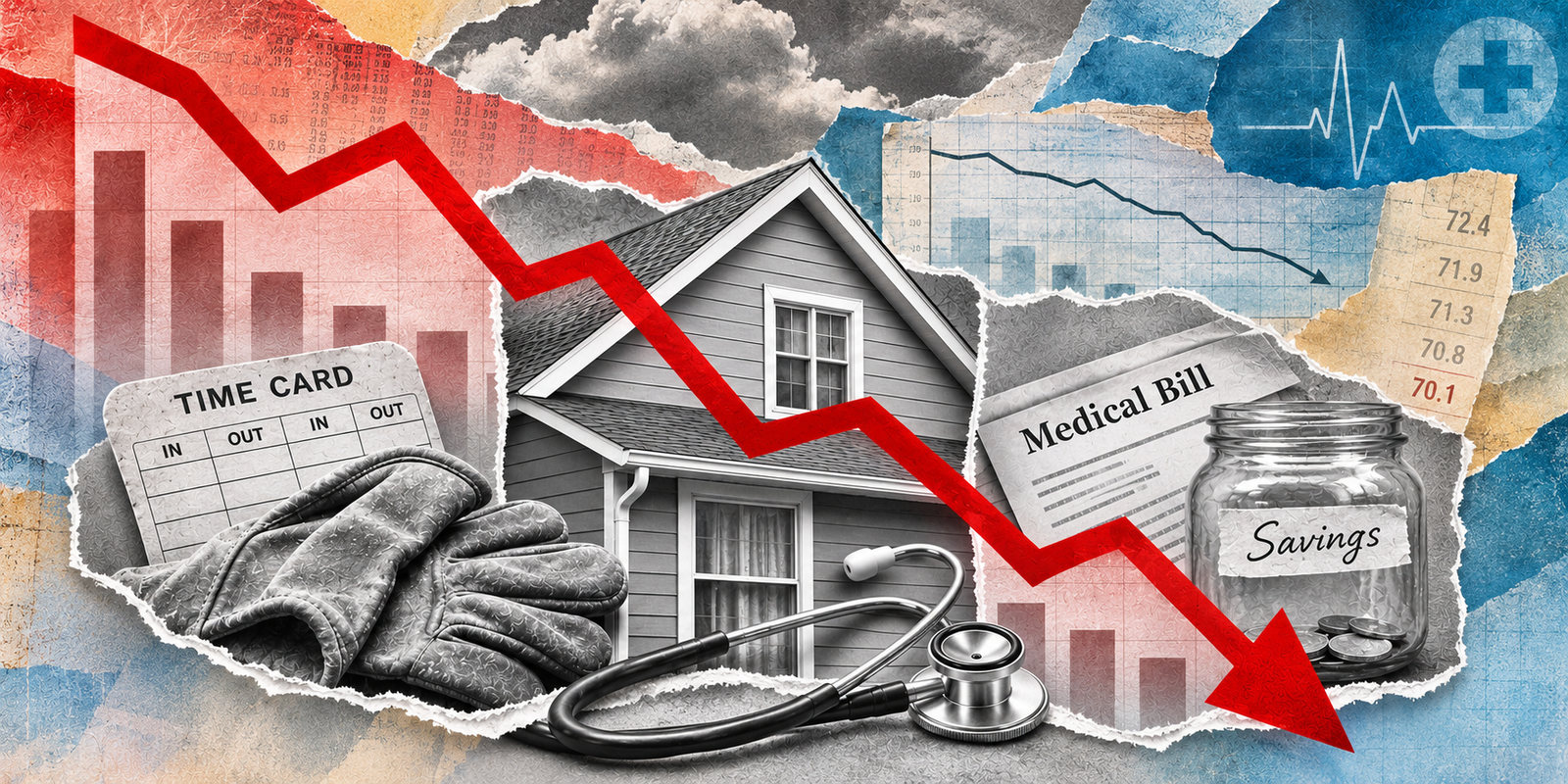
Reversing the rate of premature deaths among lower-middle-income Americans in their fifties takes new approaches to employment, housing and social connection.
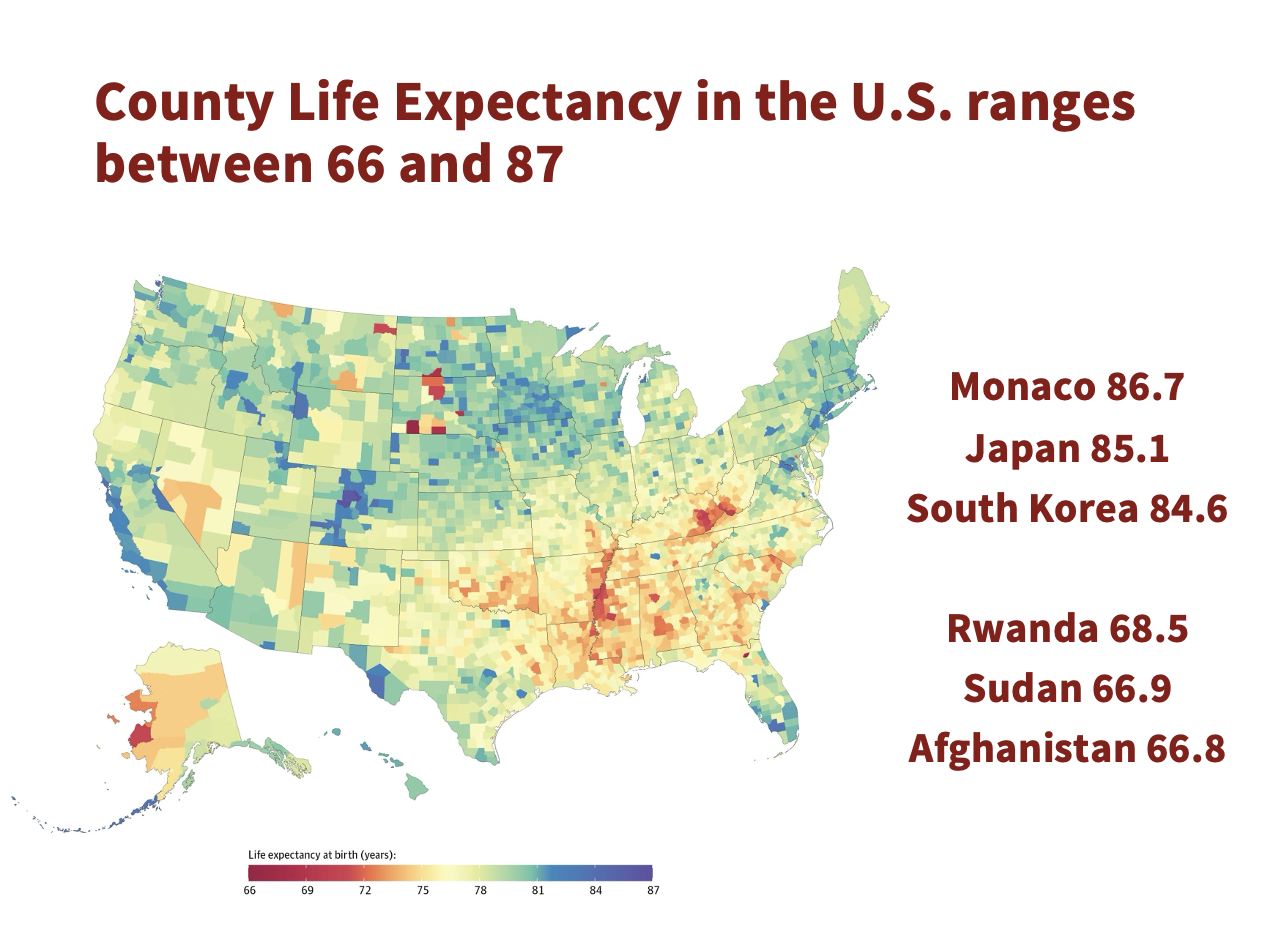
If you happen to be a resident of Marin County, Manhattan or Boulder, you’ve won the longevity lottery and can expect to live past 80 years, right up there with the inhabitants of Monaco, Japan and South Korea. But for the residents of the poorest U.S. counties, the average lifespan of 66 years ranks closer to Afghanistan, Sudan and Rwanda, per a JAMA Internal Medicine study.
For many Americans in these and other counties, life is shaped by intersecting effects of financial stress and chronic health problems. A 2025 study by Stanford health policy faculty and the Research Network on an Aging Society confirmed this; it also revealed a sobering regression in what has been a largely positive narrative about longer lifespans in the U.S. Analyzing data on 5.3 million residents with household incomes between $30,000 and $75,000, the researchers documented a clear decline in health and well-being over the past 20 years. The steepest drop was for lower-middle-income adults on the cusp of retirement, aged 50 to 59.
Dubbed the “forgotten middle” by the study’s authors, these workers earn too much to qualify for many sources of public assistance and too little to experience the mental and physical health benefits that come with economic security. As they approach 50, the financial pressures start manifesting as health problems: “We see more sick days, poor mental health days and other health-related interruptions than with people in any other income bracket,” says the study’s lead author David Rehkopf, director of the Stanford Center for Longevity and professor of epidemiology, medicine and sociology.
And this isn’t the problem of a single generation, Rehkopf warns. He and his coauthors see the same declines “for all people in the U.S. entering this age group over the last 20 years.” The researchers underscore that a healthy aging society depends on the “compression of morbidity” — living longer with a relatively short period of declining health near the end of life. But if poor health extends for years or decades, there will be major implications for healthcare spending and the solvency of the Medicare and Social Security trust funds.
“Compared to global trends, the United States during the first quarter of the 21st century has been experiencing a tragedy of unfathomable scale,” says Rehkopf. His 2010 research shows that starting in the 1980s, life expectancy at birth in the U.S. has not kept pace with other high-income nations, and now ranks 61st globally, below Chile and Kuwait. High rates of drug overdose, suicide and other “deaths of despair” account for some excess mortality, but Rehkopf notes that a comprehensive analysis is still lacking.
 He and his fellow researchers are both dissecting and sounding the alarm on this American tragedy. In a recent JAMA commentary, Rehkopf quantified it, writing, “There were 314,307,151 years of life lost between 1999 and 2022. We are devastated personally by the lost years of patients, friends, and family.” Rehkopf and Jack Rowe, a Columbia University public health professor and SCL adviser, also note that the usual suspects — obesity, cancer, racial disparities, smoking rates — aren’t entirely to blame for lower life expectancy among the forgotten middle. The declines have persisted even as healthcare coverage has expanded for millions of people, primarily through the Affordable Care Act in 2010.
“Healthcare is super important; it’s a very basic thing that everybody needs,” Rehkopf says. But “there’s a lot of other things outside the healthcare system that influence successful aging.”
In a 2022 study on successful aging in the U.S., Rehkopf and his coauthors developed a five-domain index, and well-being was only part of the puzzle. The study found that security, connectedness, a sense of productivity and engagement, and equitable access to resources are just as important. Rehkopf noted one critical element of lower-middle-class life that could disrupt more than one of these: work.
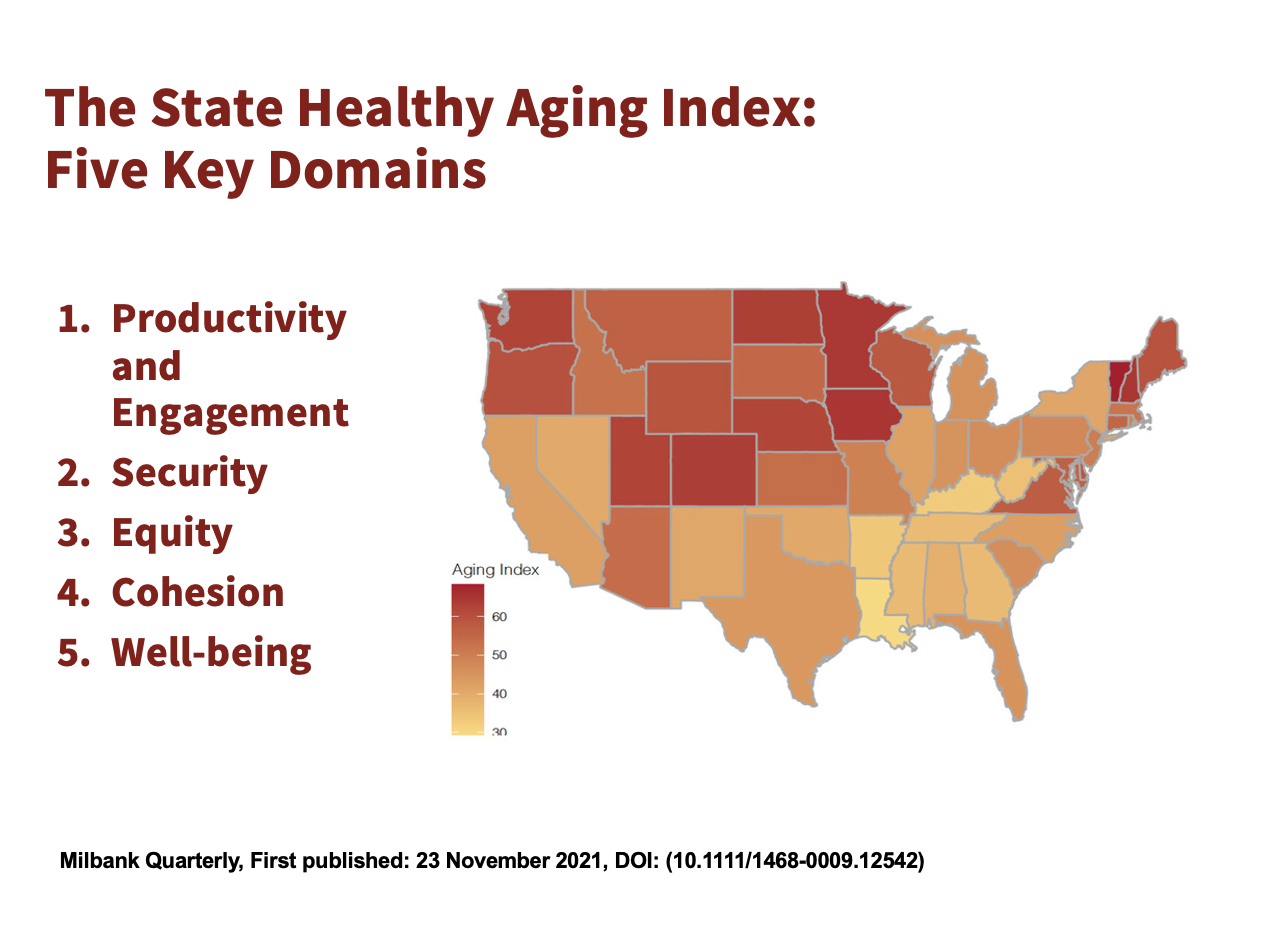 Work touches so many factors of healthy aging, Rehkopf says. “There’s the economic security that comes with it, the social connectedness, the productivity, the engagement that comes with work.”
KEEP READING
FIVE QUESTIONS
Jaimie Krems on the Power of Friendships
FINANCING LONGER LIVES
Gen X is Turning 60 – It’s Not Pretty
DEEP DIVE
Life Expectancy Is Falling for the “Forgotten Middle”
THE LONG GAME
Meet Jonathan, the 194-Year-Old Tortoise with Surprisingly Youthful DNA
ALT/SHIFT
Psychedelics May Benefit Aging Brain Health
LONGEVITY LITERACY
@SCL:
Enjoying SCL Magazine?
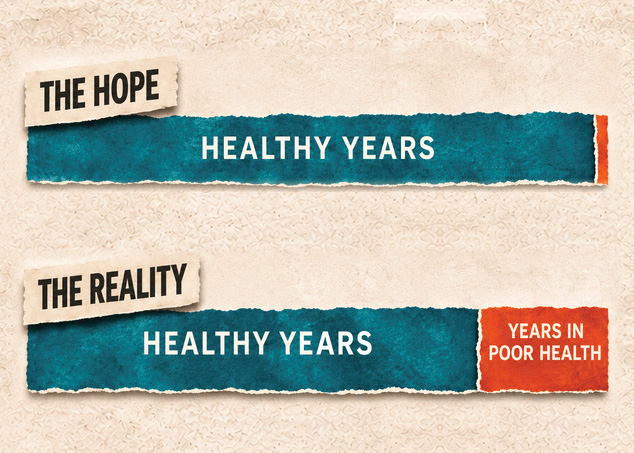 Compression of Morbidity
 David Rehkopf on the Longevity Class Divide
 Our Households Changed. Our Neighborhoods Didn’t.
 Exploring the Paradox of Longer Lives
 Tackling the Family Caregiver Squeeze