IN THE NEWS
David Rehkopf on the Longevity Class Divide
By Karen Breslau
SCL’s incoming director has developed a powerful combination of biology, data science and sociology to improve population health.
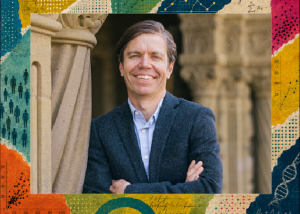 David Rehkopf’s fascination with longevity began with human cells. As a postdoctoral researcher, he worked alongside Nobel laureate Elizabeth Blackburn examining DNA samples from people in Costa Rica, where residents live unusually long lives, studying telomeres — the protective caps on chromosomes that shorten as we age. He was also studying the research of biologist Steve Horvath on DNA methylation, the chemical modifications to DNA that scientists use to build so-called “aging clocks” for cells and organs.
That immersion in the molecular biology of aging could have set up Rehkopf for a career at a lab bench. “So many of my colleagues were going to study hypertension or diabetes,” he says. “I was much more attracted to a holistic measure of people’s health and well-being.” Drawing on Blackburn’s “amazing” telomere work, Rehkopf found himself asking bigger questions: How could cellular insights be put to use beyond the laboratory? How can we use that information to learn about healthy longevity in diverse populations?
Those questions also shaped his interest in using Horvath’s methylation clocks — not just as tools for measuring an individual’’s biological age, but as potential metrics for tracking healthy aging across entire populations to determine which programs and policies are needed and which are effective. Rehkopf says the goal is to inform a “menu of solutions” that are customized for different communities.
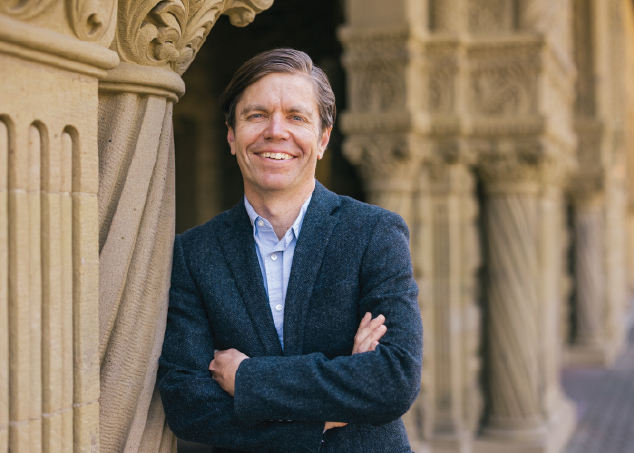
That pivot — from the biology of a single cell to the health of communities — defines Rehkopf’s approach to longevity as professor of epidemiology and population health, sociology, and medicine at Stanford University. In August, Rehkopf will become the new director of the Stanford Center on Longevity, succeeding founding director Laura Carstensen after her nearly two decades leading the center.
Rehkopf joined Stanford Medicine in 2011, and until his recent appointment to lead SCL, where he has been a co-director since 2022, he led the Stanford Center for Population Health Sciences. There his research examined how decisions made by businesses and governments shape the trajectory of healthy aging, often using large-scale data sets and mathematical models — an approach known as prioritization research — to determine which policies and programs deliver the most benefit and for whom. Notably, he continues to draw on his molecular biology background, using biological markers to more precisely estimate how various risk factors accelerate or slow the aging process at a physiological level.
Carstensen, who will remain at Stanford to focus on teaching and research, says Rehkopf’s skill with large data sets and prioritization research will allow him to bring sophisticated data analysis to the New Map of Life, SCL’s signature initiative for helping societies adapt to longer-lived populations “and begin to say what works and what doesn’t.” Just as important, she adds, is his focus on who benefits from interventions — and for whom they fail. Rehkopf’s growing body of research about the disparities in longevity for different populations, says Carstensen, “is elegant and beautiful and sobering.”
“As a social epidemiologist, Rehkopf’s focus isn’t only on how individuals can stay healthy; it’s on identifying interventions that work at a population level, so that policymakers have the evidence to act.”
The distinction between who benefits and who gets left behind is central to how Rehkopf thinks about longevity. For people with higher socioeconomic status, he notes, longevity often feels personal and actionable — a matter of individual choices about diet, exercise or medical care. “Most people in the longevity space think about themselves and what they can do, and how long they can live,” he says.
But for people with lower socioeconomic status, those same benefits can seem abstract and largely out of reach. As a social epidemiologist, Rehkopf’s focus isn’t only on how individuals can stay healthy; it’s on identifying interventions that work at a population level, so that policymakers have the evidence to act. Carstensen says that Rehkopf’s emphasis on addressing inequality, which she says will “be dramatically exacerbated by longevity” makes his work “more important than ever.”
Rehkopf’s 2025 study with Jack Rowe, professor of health policy at Columbia University Mailman School of Public Health and founding chairman of SCL’s Advisory Council, is an example of that emphasis. Drawing on two decades of data — 5.3 million responses collected between 2003 and 2022 through the CDC’s Behavioral Risk Factor Surveillance System — Rehkopf and Rowe identified a troubling pattern among the “forgotten middle,” their term for adults ages 50 to 59 with household incomes between $30,000 and $75,000. This group earns too much to qualify for social safety-net programs but too little to comfortably cover basic expenses, leaving them in a state of chronic financial stress that is eroding their health and well-being — a decline the data shows is accelerating faster than for other income groups.
It’s that kind of analysis— precise, data-driven and pointing to who is falling through the cracks — that Rehkopf brings to his new role. Under his leadership, Rehkopf wants SCL to develop rigorous evidence that companies and governments can use to enable longer, healthier lives for people from all communities and income levels.
KEEP READING
FIVE QUESTIONS
Arielle Galinsky on Connecting “Olders and Youngers”
IN THE NEWS
David Rehkopf on the Longevity Class Divide
DEEP DIVE
Tackling the Family Caregiver Squeeze
GRANDPEOPLE
Bibliophile on Wheels
ALT/SHIFT
Hollywood’s Age Shift Is Underway
LONGEVITY LITERACY
Rejuvenation Science
GAME CHANGER
Daron “Farmer D” Joffe on Roots and Renewal
FINANCING LONGER LIVES
Millennials Reach Key Milestones Later
@SCL
Mauricio Lopez-Mendez: Charting Easier Paths for Dementia Patients
Colombia Court Cites Center’s Research
Summer Podcasts
Enjoying SCL Magazine?
Karen Breslau is editor of SCL Magazine and co-author of the New Map of Life report. She has received awards for her journalism at Bloomberg, Newsweek and National Public Radio.
RELATED ARTICLES
David Rehkopf named new director of the Stanford Center on Longevity