
FROM THE EDITOR
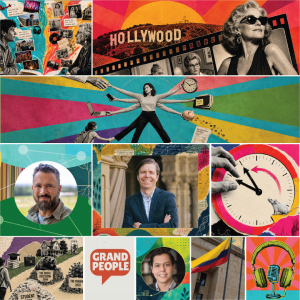 For those in the scientific world, it’s been disappointing to see how “longevity” has become conflated with wellness fads for the wealthy, such as biohacking and chugging peptides. “Most people in the longevity space think about themselves and what they can do, and how long they can live,” says David Rehkopf, professor of epidemiology and population health, sociology and medicine, who succeeds Laura Carstensen as director of the Stanford Center on Longevity next month. For Rehkopf, the more demanding — and essential — opportunities come from developing programs and policies for entire societies to lead longer, healthier and more engaged lives. Read more about Rehkopf’s approach to the longevity class divide in In the News.
One vital need is to provide greater support for family caregivers, whose often invisible labor is worth $1 trillion a year in the U.S., according to AARP. As Liz Seegert reports in this month’s Deep Dive, some employers and state governments are experimenting with modest subsidies to reduce the lifelong financial penalties that unpaid caregivers incur when they leave the workforce to care for older family members.
Science already shows us that the future of aging can look very different than it does now, and as those advances make their way from labs to clinics, more people may remain healthy as they age. In Longevity Literacy, Esther Landhuis probes the promise of “rejuvenation science” — and clears up some misperceptions.
Longevity is not just about older people — and the experience differs by generation. Older millennials bear a heavier load than other generations when it comes to caregiving and building lifetime financial security — and well, just about everything else, it seems. As MP Dunleavey writes in Financing Longer Lives, today’s 30- to 45-year-olds have been dealt a series of unfortunate events that are delaying their ability to reach financial milestones. But they are also exhibiting more — and earlier — financial self-reliance than previous generations.
One thing I’ve learned from working with SCL founding director Laura Carstensen is how vital it is for people of different generations to know and feel invested in the well-being of others. But intergenerational connection is challenging in the United States, where life tends to be age-segregated and cultural narratives stereotype people by age. As SCL Ambassador Joe Seldner writes in Alt/Shift, people over 60 have long been typecast by Hollywood as uninteresting, but that is changing as more TV shows and movies feature older talent and intergenerational stories. In Five Questions, Richard Eisenberg interviews Arielle Galinsky, founder of The Legacy Project, an organization that pairs older and younger adults to understand each other’s stories — passing up and down histories, cultures and ideals.
One place where intergenerational knowledge has long been practiced is on farms, to grow food. In this month’s Game Changer, Stacey Freed profiles Daron “Farmer D” Joffe, who helps build urban farms for schools, prisons, hotels and master-planned communities known as “agrihoods.”
Our mission at SCL is to share research in service of helping societies adapt for human longevity. Prominent leaders in business, medicine, science and public policy rely on our research to make vital decisions and we were especially gratified to see SCL’s New Map of Life cited by Colombia’s Constitutional Court in a recent ruling in a housing discrimination case. Read more about our global impact in @SCL.
Wishing you a wonderful summer, and we will be back in September with our next issue.
—Karen Breslau
KEEP READING
FIVE QUESTIONS
Arielle Galinsky on Connecting “Olders and Youngers”
IN THE NEWS
David Rehkopf on the Longevity Class Divide
DEEP DIVE
Tackling the Family Caregiver Squeeze
GRANDPEOPLE
Bibliophile on Wheels
ALT/SHIFT
Hollywood’s Age Shift Is Underway
LONGEVITY LITERACY
Rejuvenation Science
GAME CHANGER
Daron “Farmer D” Joffe on Roots and Renewal
FINANCING LONGER LIVES
Millennials Reach Key Milestones Later
@SCL
Mauricio Lopez-Mendez: Charting Easier Paths for Dementia Patients
Colombia Court Cites Center’s Research
Summer Podcasts
Enjoying SCL Magazine?