
@ SCL
Mauricio Lopez-Mendez: Charting Easier Paths for Dementia Patients
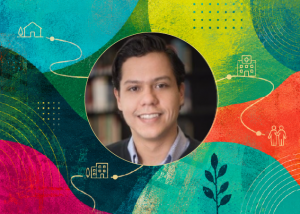 When Mauricio Lopez-Mendez began his academic journey with a degree in international relations, he had little sense that his career would lead him to the bedside of dementia patients — or rather, to the data that tells their stories. Today, as a New Map of Life fellow at the Stanford Center on Longevity, Lopez-Mendez is researching one of the most urgent U.S. health policy challenges: understanding how dementia patients and their caregivers get caught in a relentless, exhausting cycle of hospital and emergency room visits, and what can be done to improve care.
After stints at Mexico’s Ministry of Finance and the public policy think tank Fundación IDEA, Lopez-Mendez found his calling in field work: talking to nurses in rural Mexican clinics and visiting water-contaminated communities in Bangladesh. A summer research fellowship examining arsenic contamination in Bangladesh’s rural wells reaffirmed his philosophy that practical, near-term solutions and long-term systemic investment are not in opposition. Both approaches are necessary, pursued in parallel, on different time horizons. “It’s a fine balance,” he says.
That dual vision animates his dementia research. After earning his master’s in public policy analysis from the University of Chicago and a PhD in health services research from Brown University, Lopez-Mendez arrived at Stanford as a New Map of Life fellow in November 2024. Working with faculty advisers Fernando Alarid-Escudero and Jeremy Goldhaber-Fiebert, health policy experts at Stanford Medicine, his primary focus is what he calls “trajectories of care” — mapping the patient journey from the moment of diagnosis to death. Using longitudinal Medicare data and decision models, Lopez-Mendez can analyze scenarios of how many times a person living with dementia is likely to be hospitalized, visit an emergency room or transition into a skilled nursing facility, depending on how the health system may intervene.
What he’s found is sobering. When dementia is compounded by other chronic conditions — and it almost always is — the number of care transitions more than doubles. Patients and families repeatedly find themselves in hospitals, emergency rooms and care facilities at a pace that strains both human endurance and healthcare budgets. With medical and long-term care costs for dementia totalling $232 billion per year, the urgency for systemic intervention has never been greater.
The second area of his research looks at what actually helps break the costly cycle, particularly in emergency department and hospital settings. Lopez-Mendez says one intervention stands out: structured follow-up care in the 30 days after discharge — such as nurse practitioner home visits, coordinated check-ins, medication reconciliation and care navigation. These approaches have been shown in regional trials to significantly reduce hospital readmission rates. The next challenge is understanding how they can be implemented and scaled across health systems nationwide.
His broader ambition is to bring patients and caregivers — the “dyads” at the center of dementia care — into the decision-making process more meaningfully, using decision models that quantify their preferences and assess the cost-effectiveness of non-pharmacological interventions. “The technological revolution has transformed what’s possible in healthcare,” he says. “What excites me most is that the same support driving healthcare innovation can be pointed at our hardest systems challenges, turning them toward the people that need them most.”
—Tamara Straus is deputy editor of SCL Magazine.
KEEP READING
FIVE QUESTIONS
Arielle Galinsky on Connecting “Olders and Youngers”
IN THE NEWS
David Rehkopf on the Longevity Class Divide
DEEP DIVE
Tackling the Family Caregiver Squeeze
GRANDPEOPLE
Bibliophile on Wheels
ALT/SHIFT
Hollywood’s Age Shift Is Underway
LONGEVITY LITERACY
Rejuvenation Science
GAME CHANGER
Daron “Farmer D” Joffe on Roots and Renewal
FINANCING LONGER LIVES
Millennials Reach Key Milestones Later
@SCL
Mauricio Lopez-Mendez: Charting Easier Paths for Dementia Patients
Colombia Court Cites Center’s Research
Summer Podcasts
Enjoying SCL Magazine?