FIVE QUESTIONS
Arielle Galinsky on Connecting “Olders and Youngers”
By Richard Eisenberg
Views about aging change through storytelling, says the 24-year-old founder of The Legacy Project.
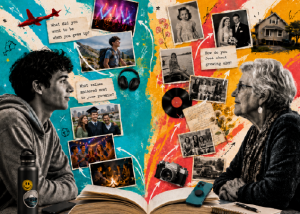 Arielle Galinsky has become one of the youngest leaders in a U.S. movement to promote intergenerational connections to counter loneliness, ageism and generational stereotypes. At 24, she is founder and CEO of The Legacy Project, a nonprofit organization that matches college students and senior living residents for intergenerational friendship through storytelling. So far, the organization has connected more than 500 participants Galinsky dubs “olders” and “youngers” for guided storytelling sessions that last for nine months. They ask each other a series of “life questions” about what they wanted to be when they grew up, what values mattered most to their parents and how they feel about growing old. Those conversations, intended to broaden the participants’ perspectives on each others’ lives, are turned into books published by local chapters of The Legacy Project. Galinsky plans to expand chapters to religious communities and residential communities in the future.
The Legacy Project was sparked by an experience early in Galinsky’s life. “I lost both my grandfathers when I was 10 and never had the opportunity or foresight to ask them about their life stories, yet they were so formative in my life,” she says. “When I was in college at Tufts and started asking some older adult friends whether they had shared their stories with their families, often the answer was no.”
The storytelling project complements Galinsky’s academic work as a candidate for a master’s in public policy at Harvard and a law degree at Yale.
This interview has been edited for length and clarity.
What do the younger and older adults get out of the storytelling activity of The Legacy Project?
The activity is to interview one another and write each other’s narratives, providing a meaningful, long-term project that younger and older adults can co-create together across generations. The Legacy Project’s books can be treasured by their families and shared with the broader community.
Beyond that, we focus on combating social isolation and loneliness, alternatively framed as building social connectedness. There’s a lot of research that shows that both olders and youngers are isolated.
We also aim to change ageist viewpoints. For a lot of our youngers, this is the first time they’ve engaged with an older adult outside of their family. Likewise, for a lot of the older adults, this is the first time they’ve created a friendship that is not a familial or workplace relationship. Making ageism relevant to all our participants is something we aim to do. For older adults, ageism is potentially not being able to maintain a job or get a new job. There’s also reverse ageism in the workplace — young people who are qualified for opportunities being turned away because they haven’t climbed the ladder.
The last area is changing the younger participants’ career paths to expose them to gerontology as a potential pathway.
You’ve said The Legacy Project is about building meaningful intergenerational relationships that bring joy and purpose. How does that happen?
A lot of the pairs matched at Tufts three or four years ago are still friends to this day. That shows the value and joy these relationships bring.
One student who never had a grandparent figure in his life found he got really close to the woman we partnered him with — she became almost a grandmother figure to him. When she passed away, unfortunately during the program, he wrote a beautiful tribute to her, mentioning how much joy that one-on-one relationship brought him.
We aim to support the creation of these relationships in the short term but expect — for the majority of individuals — a deeper relationship will extend far beyond when they submit the final book.
How do you think The Legacy Project storytelling activity changes notions of lives well lived for the “youngers” and the “olders”?
I was just reading through some of the testimonials from this year, and a lot of our students shared that they now have a reframed view of what aging means. They no longer see aging as a sense of decline, but rather as something that can be celebrated and maximized. They no longer looked at older adults as a monolith. Their view of what a life well lived in their own trajectory is now changed.
Likewise, we have youngers supporting older adults in how to utilize technology, coming over and cooking dinner with them or providing support in the home. The program evaluations from our younger participants show that The Legacy Project has altered how they think about aging in their own life and the practices they want to adopt to live a healthier, longer life and to be like their matches.
I’m guessing the younger people start thinking differently about their grandparents and the older people start thinking differently about their grandchildren.
Yes. I know that some of the young people start interviewing the older adults in their lives. At the end of all our books, we provide a list of questions to encourage younger and older adults to start asking these questions, whether through formalized interviews or daily conversations, to better understand the people around them and the stories that shape them.
You’re working to advance aging policy reform at the state and federal levels. Why do you believe that intergenerational advocacy is important?
Given the slow-moving process of aging policy, any change we make today is not going to affect the current older adults — the silent generation or baby boomers. It will affect future populations. It is incredibly silly to think we can design any reform to Social Security or a novel long-term care system without impacting future generations. So it is important that we bring all the stakeholders to the table.
Aging policy reform is not on the policy agenda right now. The only way to bring enough buzz toward it is to have an intergenerational coalition of younger and older adults who are collectively advocating, because aging is a universal experience.
KEEP READING
FIVE QUESTIONS
Arielle Galinsky on Connecting “Olders and Youngers”
IN THE NEWS
David Rehkopf on the Longevity Class Divide
DEEP DIVE
Tackling the Family Caregiver Squeeze
GRANDPEOPLE
Bibliophile on Wheels
ALT/SHIFT
Hollywood’s Age Shift Is Underway
LONGEVITY LITERACY
Rejuvenation Science
GAME CHANGER
Daron “Farmer D” Joffe on Roots and Renewal
FINANCING LONGER LIVES
Millennials Reach Key Milestones Later
@SCL
Mauricio Lopez-Mendez: Charting Easier Paths for Dementia Patients
Colombia Court Cites Center’s Research
Summer Podcasts
Enjoying SCL Magazine?
Richard Eisenberg is an “unretired” journalist and podcaster specializing in longevity, work, money and retirement. He writes “The View From Unretirement” column for MarketWatch.
RELATED ARTICLES
She’s 88. He’s 21. They’re Classmates

Economic Mobility Is Intergenerational