
FIVE QUESTIONS
Laura Carstensen on Longevity’s Big Moment
By Karen Breslau
The founding director of SCL reflects on the greatest challenges and opportunities of longer lives.
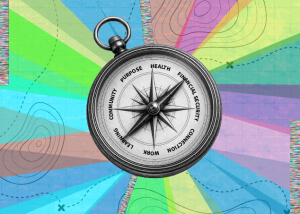 When the Stanford Center on Longevity launched in 2007, founding director Laura Carstensen spent a lot of time correcting misperceptions. “The initial response people had was, ‘Like the Methuselah Foundation? You are going to extend life?'” Carstensen was clear that the Center’s aim was not to increase lifespans — which had nearly doubled during the 20th century — but rather to build societies that accommodated that new and unprecedented reality. Another persistent misperception was that “longevity” is a euphemism for aging and that SCL was a center on aging. As Carstensen noted often, “Longevity is not synonymous with aging. It is a metric of length.” The Center’s interest is in the challenges and opportunities that longer lives present. While the Center is keenly interested in older people, in Carstensen’s view, “longer lives have implications for every stage of life, and the roots of many problems faced at advanced ages have their roots much earlier in life.” The Center’s mission is to use longer lives to improve quality of life at all ages.
In 2019, under Carstensen’s leadership, the Center launched the New Map of Life initiative, designed to rethink the human life course in response to skyrocketing life expectancies, and it has trained nearly 40 postdoctoral fellows, mentored by faculty affiliates spanning multiple disciplines, about the ways in which longevity is transforming societies, cultures, and economies. After nearly 20 years, Carstensen, Stanford’s Fairleigh S. Dickinson Jr. Professor in Public Policy and professor of psychology, will step down this summer from her role at SCL to pursue a new project alongside her research and teaching. I spoke with Carstensen about what she’s learned along the way and what’s next.
This interview has been edited for length and clarity.
What’s changed since the Center’s early days?
I hope it’s clearer that the aging process has not changed much, if any, genetically over the last several thousand years. Rather, longevity — the length of life — increased, and that has enormous implications for nearly all aspects of our lives. The modifiability of aging, on the other hand, is also clear. Even though we’re essentially the same physiological beings that our ancestors were, we changed the world in ways that are allowing us to live healthier and longer. That’s why we are confident that we can build a world where the majority of people live well for a century.
You are on the scientific advisory council to the Health District of Singapore, which is building the Queenstown Health District, a very intentional all-ages community that is incorporating principles from the New Map of Life. What are you seeing?
The Singapore government has given a group of scientists the freedom to design a neighborhood in ways that support long-term health and intergenerational connections, continued financial security and exercise. They’re thinking about all the factors that contribute to long, healthy and engaged lives and literally programming them into the community. What’s really cool about the Queenstown Health District is that it can provide a proof of concept that social and physical designs can improve long life.
Already they have built parks and playgrounds with swings for the kids and balance beams for older residents, to provide shared spaces where different ages interact. When we advisers fly in from different countries, we’re starry-eyed at what they can do. Singapore can do things like this in part because they’re smaller, and their government can act quickly. For example, the government recognized about a decade ago that people weren’t saving enough for retirement. So they flipped a switch and said, “OK, everybody’s putting in more money into their retirement account.”
If you had to give a grade to where the U.S. is in implementing the New Map of Life principles, could you take out your red pen?
Compared to some countries, like Singapore, I’d give the U.S. a C-minus, and I am used to grade inflation! The federal government has done little to improve longevity. Unlike the Singapore government, which can require people to save more for retirement, for example, the U.S. cannot quickly implement such programs. On the other hand, in part because the government contributes less, we see a lot of innovation coming from the private sector. We have entire industries offering new products and services. So I’m optimistic about what the U.S. can contribute to longevity. At a global level, it’s fabulous to think about the different approaches that can come from the public and private sectors in a range of countries.
Longevity has gone mainstream and led to billions of dollars in market interest. How has that changed the Center’s work?
It’s true that vast investments are going to longevity. Most of these funds are directed at ways that individuals can live longer. There isn’t, in my experience, much philanthropic interest in this space aimed at helping people live better as we live longer lives. I am discouraged that we are sleepwalking through this seismic demographic shift without investing more in the opportunity to rewrite the life scripts that have guided life and imagining ways that we could use them to improve life.
It’s also discouraging that as longevity has entered public consciousness, much of what we hear about are pitches for questionable products that supposedly make people live longer. There are so many snake oil salesmen in this space that it’s hard for consumers to distinguish what is evidence-based and what is not.
As you often say, transitions are a feature of longer lives. What’s happening next for you?
I’m going to focus more on research and teaching, but first I’m going on sabbatical and look forward to having more time for the things I love — my garden, being at home, sitting in the sun, going for walks. I want to take Pilates lessons. I’m going to take a break in my schedule to say, How do I create a healthy lifestyle going forward and build the rest around it?
While I hopefully will have a more relaxed schedule, during my sabbatical I’ll be developing an online course called the Fundamentals of Longevity, which will tell the story of longevity and the potential to live longer, better lives, a change we really need in the world. The course will be accessible far beyond Stanford, so that we can help frame the conversation around longevity and help people appreciate the extraordinary promise of science, technology and social change to improve life. There is a crisis on the horizon, if we don’t change the way we live.
We have the opportunity to change our lives for the better. We have opportunities no previous generation of humans in history has had, and we need to start implementing them.
KEEP READING
FIVE QUESTIONS
Laura Carstensen on Longevity’s Big Moment
ALT/SHIFT
La jubilación? Choju? Ruhestand?
DEEP DIVE
Sipping from the Firehose of Longevity News
GRANDPEOPLE
Fossil Fascination Sparks New Career
GAME CHANGER
Rachel Zoffness on Treating Chronic Pain
FINANCING LONGER LIVES
The Long-Term Care Wake-Up Call
@SCL:
Healthy Aging 2026: Purpose, Power and Play
Xue Yan Ho: Worms, Aging and the Quest to Prevent Neurodegeneration
Antoine (Po-Han) Ho: Skin as a Window to the Body’s Health
Enjoying SCL Magazine?
Karen Breslau is editor of SCL Magazine.