
@ SCL
Xue Yan Ho: Worms, Aging and the Quest to Prevent Neurodegeneration
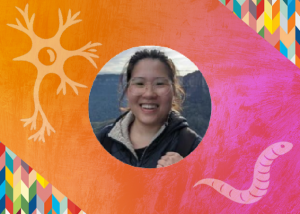 For Xue Yan Ho, the dream is simple to state and enormously difficult to achieve: stop neurodegenerative diseases like Alzheimer’s and ALS before they steal people’s minds. “At the moment, what can be treated are the symptoms, but not the cause,” she says.
As a postdoctoral researcher in Stanford’s Shen Lab and a New Map of Life Fellow at the Stanford Center on Longevity, Ho is pursuing that goal through an unlikely hero: a microscopic worm about the size of a comma on a page. The organism, C. elegans, has yielded four Nobel Prize discoveries and offers researchers a remarkable set of advantages — a transparent body that allows direct visualization of neurons, a two- to three-week lifespan ideal for aging studies, a well-mapped genome amenable to precise editing, and many conserved (or evolutionarily unchanged) molecular pathways compared to human cells.
Ho’s research, supervised by Stanford Biology Professor Kang Shen at his neuroscience lab, focuses on two interlocking cellular mechanisms. The first is the integrated stress response (ISR), a biological pathway that normally helps cells recover from adversity. In neurodegenerative disease, the ISR appears to malfunction — switching on and staying on when it should turn off, causing neural damage. The second is autophagy, the cell’s built-in housekeeping process, which breaks down under chronic stress. If autophagy could be reactivated, Ho believes it might clear the cellular debris that drives neurodegeneration.
Her translational pipeline moves carefully from worm to human: Findings from C. elegans are first validated in human neurons grown in a dish, then tested in mouse models in collaboration with other labs. “If that works, then we have more confidence that the pathway, or the proteins that we found, are conserved in many different species,” she explains.
The SCL fellowship has expanded Ho’s thinking well beyond the laboratory bench. Born and educated in Singapore — she holds a BS from Nanyang Technological University and a PhD from the Queensland Brain Institute — Ho arrived at Stanford focused on molecular mechanisms. The fellowship pushed her toward bigger questions. “Joining this program has allowed me to think about socioeconomic consequences,” she says. Through quarterly seminars featuring guests ranging from Hollywood scriptwriters to philosophers of death, and workshops on science communication, the program trains researchers to translate their work for general audiences and policymakers.
One policy contrast has particularly struck her. Singapore’s Queenstown Health District — developed in partnership with the Stanford Center on Longevity and its founding director, Laura Carstensen — offers a model of rapid, integrated aging support: on-site nurses, community programming and social connection initiatives. “In Singapore, things are implemented very quickly,” Ho observes. In the U.S., she notes, layered policy processes make such implementation more complex, even as the aging Baby Boomer generation makes the need increasingly urgent.
For Ho, the north star remains healthspan — living well, not merely longer. “I don’t want to be living longer but sicker,” she says. Delaying the onset of neurodegenerative disease is the immediate goal; curing it altogether, she allows, “might be a further dream.” It’s a dream she is pursuing one tiny, transparent worm at a time.
—Tamara Straus
KEEP READING
FIVE QUESTIONS
Laura Carstensen on Longevity’s Big Moment
ALT/SHIFT
La jubilación? Choju? Ruhestand?
DEEP DIVE
Sipping from the Firehose of Longevity News
GRANDPEOPLE
Fossil Fascination Sparks New Career
GAME CHANGER
Rachel Zoffness on Treating Chronic Pain
FINANCING LONGER LIVES
The Long-Term Care Wake-Up Call
@SCL:
Healthy Aging 2026: Purpose, Power and Play
Xue Yan Ho: Worms, Aging and the Quest to Prevent Neurodegeneration
Antoine (Po-Han) Ho: Skin as a Window to the Body’s Health
Enjoying SCL Magazine?