
FIVE QUESTIONS
Jaimie Krems on the Power of Friendships
By Richard Eisenberg
The director of UCLA’s Center for Friendship Research says friends are the elixir of life.
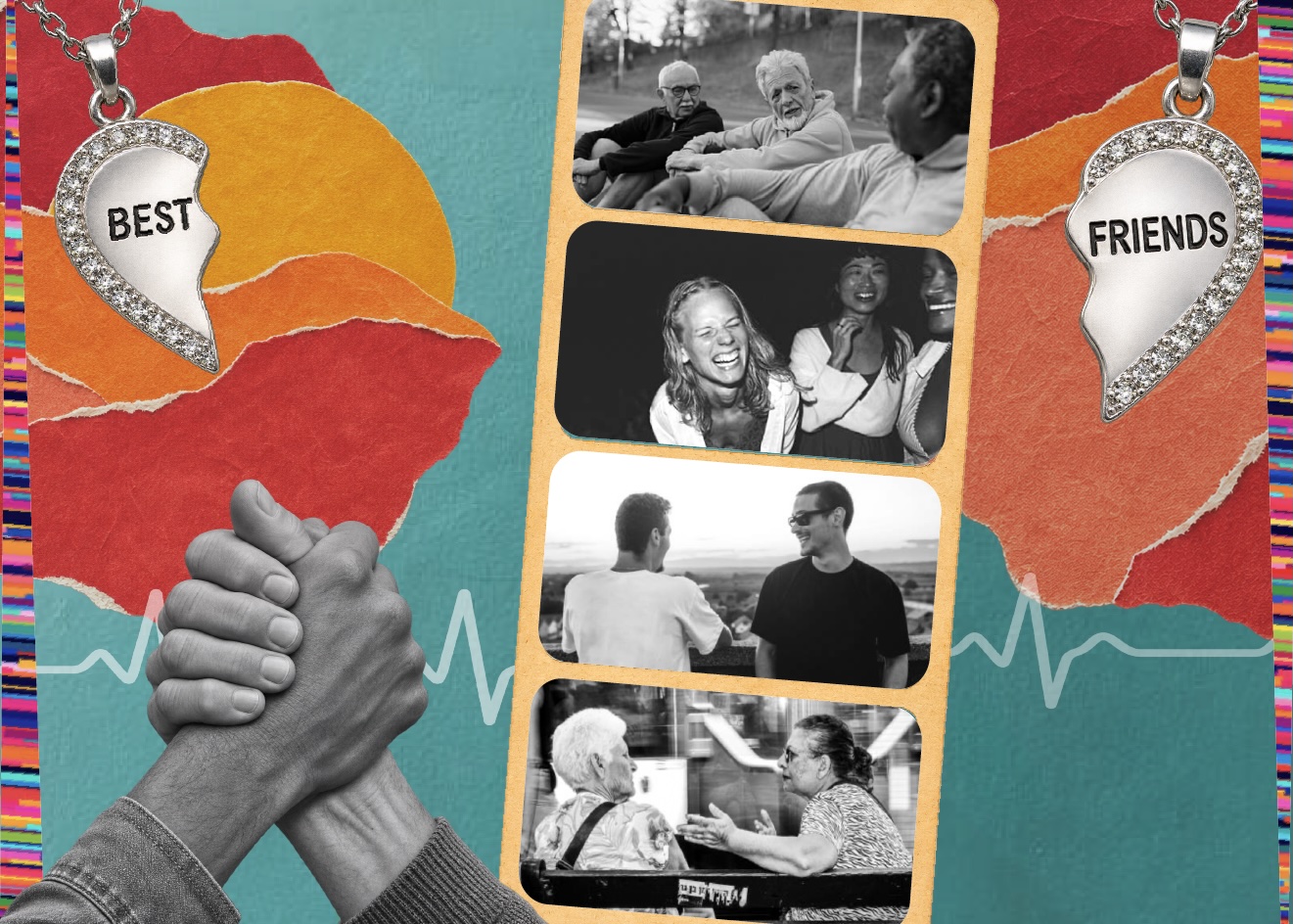 For psychologist Jaimie Krems, director of the UCLA Center for Friendship Research, “friendships are a human need. They are as consequential for our health as food, nutrition, exercise and sleep.” As principal investigator at UCLA’s Social Minds Lab, Krems draws on cognitive science, evolutionary anthropology and animal behavior to study how people navigate their social worlds.
Krems defines friends as people who care about us, with whom we interact frequently, and with whom we share mutual attraction. Finding and fostering friendships, she says, means making time for one another and finding your people. But we’re not doing a great job of this, she says.
Psychology researchers haven’t been very helpful in teaching the importance of friendships, either. Over the past few decades, Krems notes, fewer than 4 percent of nearly 30,000 peer-reviewed articles in top psychology journals were about adult friendship. To help accelerate the research, UCLA’s friendship lab will host an academic conference on adult friendship in November 2027.
Educators, Krems says, could do a better job teaching the importance of friendship, too. “I know of more college courses on Taylor Swift than on human friendships,” she said in her 2026 TEDx talk, also noting that “if friendship was a drug, it might be one of the most prescribed medications in history.”
This interview has been edited for length and clarity.
How is friendship a key determinant of health and longevity?
Having friends seems to help people do well under stress, so it has effects on cardiovascular health. Having friends and social support also seems to buffer people from getting sick; it affects our immune systems. If you have social connection in adulthood, it could decrease your likelihood of stroke by 30 percent and your likelihood of dementia by about half.
If we treat friends with the same care that we treat our romantic relationships and make them a priority, they’re going to be that constant for us, which means better health, happiness and well-being.
“If friendship was a drug, it might be one of the most prescribed medications in history.”
Why do you say there’s a friendship recession in the United States?
In 1990, about one in three people in the United States said they had a good-sized group of friends. Now it’s about one in 10, according to the American Enterprise Institute. Today, one in five single men in the U.S. has zero friends.
The pandemic really hit us hard in our relationships; there’s some evidence to suggest that we feel more disconnected on Zoom. Social media has polarized folks, leading to secondary effects on our relationships.
In one study, roughly 60 percent of young adults in the U.S. said they felt lonely most or all of the time. One in three older adults feels socially isolated; for older adults, measures of well-being and happiness are most strongly linked to their having friends and social support.
What about the friendship challenges for people at different ages?
For older people, it can be really daunting. But I was talking to a friend I do Pilates with who just reached her eighties, and she says, “Well, I’m not dead yet, so why not make a friend?”
Starting at middle age, you have a lot of demands on your time. There are partners, children, parents and jobs, and it can be difficult to find the time, not just to maintain friendships, but to make friendships. Reigniting old friendships seems to be a good possibility.
For younger adults, the issue seems to be one of psychological discomfort, much more than time or availability.
What are your thoughts about intergenerational or long-distance friendships?
I think intergenerational friendships are massively powerful. Just being together with someone who is not like us keeps our minds going, and it’s a really beautiful relationship. It also might be a relationship in which there’s very little competition. You are just together, learning, thinking, playing or having a conversation.
As for long-distance or similar friendships, I would say don’t wait for that perfect three-hour window to catch up on everything you’ve missed in each other’s lives. Just communicate in a way that’s synchronous, where you’re both together, and say, “Hi, I’m thinking of you. What’s going on?”
Which interventions are most effective for building friendships?
There really is nothing that is proven. Many people often give the advice to join a club to build friendships. A club meets regularly; you don’t have to schedule it, so removing scheduling can be a huge boon. And the mutual attraction part is that if you join a club, it’s from a common interest.
Also, we often don’t want to ask friends for help. But if we remember how good it feels to be able to help a friend, I think we’d be more likely to engage in these bids for connection.
You might also want to get together with a friend to do the horrible errands you don’t want to do. The errands will feel less onerous, and you’ll be building a connection. It seems like a real win-win.
KEEP READING
FIVE QUESTIONS
Jaimie Krems on the Power of Friendships
FINANCING LONGER LIVES
Gen X is Turning 60 – It’s Not Pretty
DEEP DIVE
Life Expectancy Is Falling for the “Forgotten Middle”
THE LONG GAME
Meet Jonathan, the 194-Year-Old Tortoise with Surprisingly Youthful DNA
ALT/SHIFT
Psychedelics May Benefit Aging Brain Health
LONGEVITY LITERACY
@SCL:
Enjoying SCL Magazine?
Richard Eisenberg is an “unretired” journalist and podcaster specializing in longevity, work, money and retirement. He writes “The View From Unretirement” column for MarketWatch.
RELATED ARTICLES
 Gratitude Adds More Than Years
How an age-old practice rewires our brains to favor good memories over bad.
Read more
 She’s 88. He’s 21. They’re Classmates
Goucher College joins a growing movement of higher education institutions forging ties with retirement communities
Read more
 Arielle Galinsky on Connecting “Olders and Youngers”
Views about aging change through storytelling, says the 24-year-old founder of The Legacy Project.
Read more
 The Traveling Nanas
“It’s never too late to have a best friend” — or to hit the road, rail or sky with her.
Read more