
ALT SHIFT
Psychedelics May Benefit Aging Brain Health
By Julie Gordon
Scientists are exploring whether once-banned drugs can help improve neural plasticity, mood and cognitive flexibility.
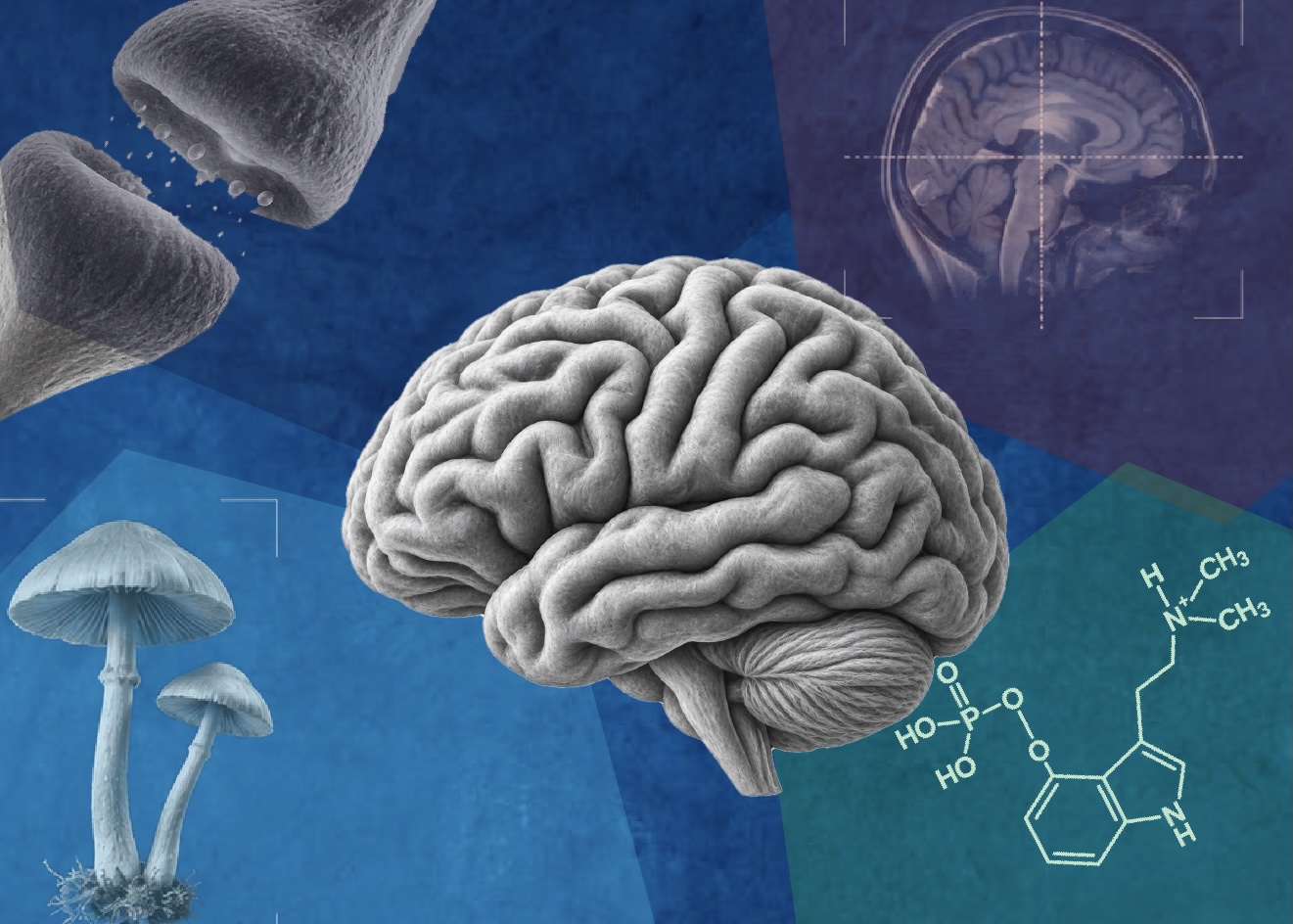 In May 2026, Frontiers in Neuroscience published a report about researchers in Brazil who had administered two strong doses of psilocybin — the active compound in magic mushrooms — to a woman in her eighties with a 10-year history of advanced Alzheimer’s disease. In the days and weeks following her first dose, the patient showed remarkable improvements: she regained urinary continence and improved mobility, spontaneously dressed herself, and progressed from limited monosyllabic speech to talking at length about her past. She became more alert and emotionally expressive, and was able to recognize family members and engage in conversation.
The case study caused a stir within the research community. Some criticized the trial on a single patient for lacking a suitable control group and academic rigor. There were ethical concerns related to patient consent. Yet even skeptics have acknowledged that there is preliminary evidence to suggest that psilocybin, and perhaps other psychedelics, may have therapeutic potential for conditions related to aging.
That possibility coincides with a resurgence in psychedelic research. The field took off in the 1950s and ’60s — the era of Timothy Leary’s LSD experiments — but was sharply curtailed in 1970 with the introduction of the Controlled Substances Act, which added bureaucratic barriers to using psychedelics for medical research. Interest in psychedelic research worldwide picked up again in the 1990s, thanks to advocacy by groups like the Multidisciplinary Association for Psychedelic Studies, breakthrough clinical trials, developments in brain science, as well as media accounts of the therapeutic benefits of psychedelics.
A National Geographic journalist wrote about her life-altering experience with ayahuasca, a South American psychoactive tea she credited for relieving her lifelong depression. Prominent figures including physician Gabor Mate and journalist Michael Pollan have popularized psychedelic therapies. And in 2025, 60 Minutes reported on U.S. combat veterans with post-traumatic stress disorder (PTSD) who took part in a psychedelic retreat in Mexico. Eight of the nine participants reported positive shifts, and some said their suicidal thoughts had stopped.
Policy is shifting as well. In April 2026 the Trump administration fast-tracked review of psychedelics for mental health disorders, and the Department of Veterans Affairs is participating in several clinical studies testing the effectiveness of psychedelic drugs for active-duty military members and veterans with PTSD.
From Mental Health to Healthy Aging
Currently, at least 386 clinical trials with psilocybin are registered on the World Health Organization’s international database, and thousands more are examining the therapeutic potential of LSD, MDMA (the active ingredient in ecstasy), DMT (found in ayahuasca), ibogaine and ketamine for conditions including addiction and substance use disorder, PTSD, depression, anxiety, anorexia nervosa, and Alzheimer’s and Parkinson’s diseases. Most of these studies are in early stages and still inconclusive.
A growing subset asks a broader question: Can psychedelics support healthy aging by boosting neuroplasticity, improving mood and promoting cognitive flexibility? The PLASTICITY study at UC Berkeley, launched earlier this year, is one of the first to explore how psychedelics might support healthy aging in adults aged 60 to 85 with no preexisting psychiatric conditions. Bringing together researchers from disciplines such as neuroscience and psychology, the study assesses psilocybin’s potential effects on memory and perception, mood and cognition, and neurodegenerative disease.
Other studies are attuned to specific medical conditions. Teams at the Johns Hopkins Center for Psychedelics and Consciousness Research are exploring whether psilocybin can mitigate depression among veterans with PTSD, cancer patients and those in the early stages of Alzheimer’s. At University of California, San Francisco (UCSF), clinical trials are exploring whether psilocybin and ketamine can support people living with Parkinson’s and related depression.
Ellen Bradley is an assistant professor of psychiatry leading UCSF’s Parkinson’s trials. Along with collaborator Joshua Woolley, also a psychiatrist, she sees promise in this research but insists on caution. “There’s no drug that affects your central nervous system that is risk-free,” she says. Her team screens participants carefully and monitors them for signs of worsening psychosis, a particular vulnerability in Parkinson’s. She notes that the disease reaches well beyond tremor and difficulty walking, involving many brain circuits, and that some of these changes overlap with other neurodegenerative diseases and with normal aging. That raises a tantalizing question. “Is it possible that some of these drugs could help make the brain more resilient, whether to Parkinson’s specifically or to the aging process more generally?” Bradley asks. “The jury’s very much still out on this, but I think it’s a worthy idea to investigate.”
Reopening “Critical Periods” in the Brain
For neuroscientist Gül Dölen, the key to unlocking the benefits of psychedelics lies in understanding “critical periods” — developmental windows when the brain is especially open to adaptation and learning, for instance when young children are most adept at acquiring language.
Dölen’s lab, at UC Berkeley, studies the effects of MDMA, ketamine, ibogaine, psilocybin and LSD in clinical trials on mice, showing a common phenomenon. “We have discovered that psychedelics reopen critical periods,” she says. That matters for longevity because plasticity fades with age and is hard to induce in an older brain.
Her lab’s PHATHOM-Stroke Project tests this idea in stroke recovery. After a stroke, a critical period for motor learning reopens for about two months, during which physical therapy is most effective. Dölen’s team hopes to return to patients whose strokes occurred more than a year ago, reopen that window with psychedelics and pair it with physical therapy.
The pairing is essential. Psychedelics’ benefits depend on context, she and others say. “You can’t take MDMA and go to a rave and expect it to cure your PTSD,” Dölen says. She is equally frank about the drugs’ limitations: “I don’t think psychedelics are going to cure everything.” She questions whether MRI (magnetic resonance imaging) tests can accurately measure neural plasticity, and she doesn’t expect the drugs to reverse diseases like Parkinson’s, though people with such conditions might gain more from physical and occupational therapy enhanced by psychedelics.
Psychedelic medicine began by asking how to treat illness. Its next chapter may be how to preserve the brain’s capacity to learn, adapt and recover as we grow older.
KEEP READING
FIVE QUESTIONS
Jaimie Krems on the Power of Friendships
FINANCING LONGER LIVES
Gen X is Turning 60 – It’s Not Pretty
DEEP DIVE
Life Expectancy Is Falling for the “Forgotten Middle”
THE LONG GAME
Meet Jonathan, the 194-Year-Old Tortoise with Surprisingly Youthful DNA
ALT/SHIFT
Psychedelics May Benefit Aging Brain Health
LONGEVITY LITERACY
@SCL:
Enjoying SCL Magazine?
Julie Gordon is a freelance writer and communications consultant based in Toronto. Her work explores topics of social justice, sustainability and human resilience.
RELATED ARTICLES
 Rejuvenation Science
Rewinding the biological clock works for mice. For humans, not yet.
Read more
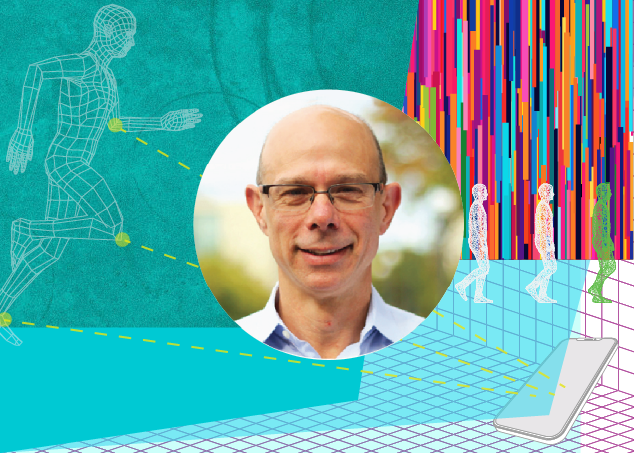 Scott Delp: Movement As Medicine
Biomechanical engineer’s app can help people stay mobile longer.
Read more
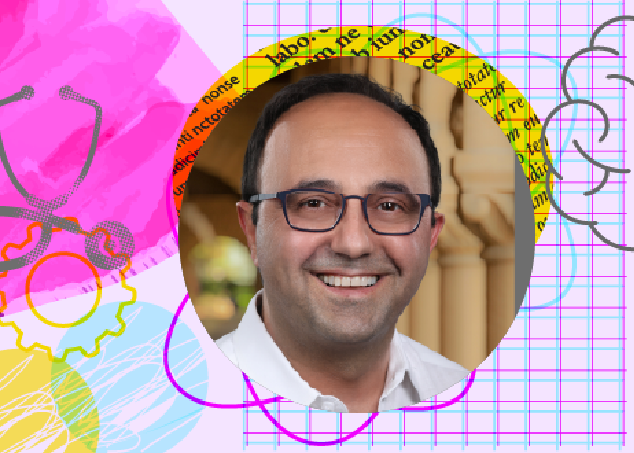 An AI-Powered Stethoscope for the Brain
Josef Parvizi, a professor of neurology and neurological sciences, collaborated with music professor Chris Chafe to convert electrophysiological recordings of the brain activity of epilepsy patients into sounds.
Read more
 Beyond DNA: How Your ‘Exposome’ Shapes Your Health
The term exposome refers to the sum of all factors a person is exposed to which affect health through epigenetic and biological processes. Exposomes can reflect environmental, social, and political exposures separately or combined.
Read more
An AI-Powered Stethoscope for the Brain
Neuroscientist Josef Parvizi had an epiphany while listening to a performance by the Kronos Quartet in 2008. As musicians transformed plasma waves recorded by NASA probes and other spacecraft into a 10-movement composition for strings, Parvizi began to wonder what it would be like to hear brain activity if it could be rendered in sound.
Read more