
@ SCL
Chip Conley on “Transitional Intelligence”
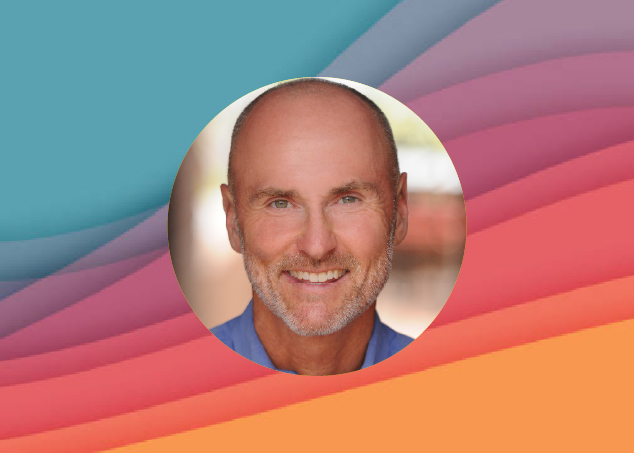 At 52, after selling his successful boutique hotel company, Chip Conley found himself in the “midlife atrium” — a metaphor coined by cultural anthropologist Mary Catherine Bateson to describe a positive, reimagined approach to longevity. “I began to think about how to curate my second adulthood,” he says.
For many, that moment can feel like an ending. For Conley, it launched an encore career devoted to cultivating meaning after 50.
In a conversation with Laura Carstensen, founding director of the Stanford Center on Longevity, as part of its annual Longevity Transitions Salon, funded by the Kabiller family and attended by fellows from Stanford’s Distinguished Career Institute, Conley spoke candidly. He discussed his ongoing battle with colon cancer, the recent death of his mother and his Israeli partner’s desire to move back to his native land, emphasizing that he seeks meaning during periods of overlapping challenges.
Conley told Carstensen he relies on what he calls “transitional intelligence,” the ability to navigate life’s inevitable changes. Whether prompted by career shifts, health challenges or personal loss, transitions follow a familiar pattern: an ending, a messy middle and a new beginning. Understanding this arc, he suggests, helps people move through uncertainty with greater resilience and self-awareness.
It’s a practice he started after receiving an unexpected invitation to join Airbnb in 2013, becoming head of global hospitality. Surrounded by employees half his age, Conley said he initially felt out of place. But the experience allowed him to reframe aging not as a period of decline, but one of curiosity and wisdom. He defined his role as a “modern elder” — someone who is both teacher and student. “I was as much an intern as I was a mentor,” he reflected, noting the value of intergenerational learning in a world where five generations now share the workplace.
That dual mindset — remaining open while drawing on experience — is central to Conley’s advice for navigating later life. Too often, he argues, people assume their most meaningful years are behind them. But the math tells a different story. A person in their mid-fifties may still have half of their adult life ahead. The challenge is not time, but intention: how to “curate” those years with purpose.
“It’s not about being youthful, it’s about being useful.”
His own life underscores this philosophy. Rather than retreat, he has leaned into what he calls a “holy urgency” — a heightened awareness of time’s value that sharpens one’s focus on what truly matters. But that urgency is balanced by an equally important practice: slowing down. “You can’t see beauty or awe unless you slow down,” he said, recalling a near-death experience that reshaped his outlook. Daily rituals — meditation, reflection, time in nature — help him stay grounded. Aging well, in his view, is not about doing more, but about being more present.
Meaning, too, plays a critical role. Drawing on the ideas in Viktor Frankl’s book Man’s Search for Meaning, Conley emphasized that while suffering is inevitable, despair is not. “The more meaning you can find, even in the worst of times, the less despair you will feel,” he said. Such thinking led him in 2018 to found the Modern Elder Academy in Baja, California, “the world’s first midlife wisdom school.” He opened a second campus near Sante Fe in 2021. Conley says 9,000 people from 60 countries have attended the academy, and there are 60 regional chapters around the world.
Unsurprisingly, Conley rejects traditional notions of retirement. He advocates for continued engagement — shifting from a focus on achievement to one of contribution. “It’s not about being youthful,” he said. “It’s about being useful.”
For those over 50, his message is practical and hopeful: Embrace curiosity, invest in relationships and ask the hard question: What will you regret not doing in 10 years? The answer, he suggests, is the clearest guide to a meaningful second act.
KEEP READING
FIVE QUESTIONS
Michael Clinton on “Life Layering”
ALT/SHIFT
She’s 88. He’s 21. They’re Classmates
FINANCING LONGER LIVES
How to Balance Love and Money Decisions
DEEP DIVE
Betting on the Longevity Market
How Leading Brands Are Winning the 50+ Economy
GRANDPEOPLE
Meet the King of Big Veg
GAME CHANGER
Incarcerated as a Teen, He’s Now a CEO
LONGEVITY LITERACY
The Longevity Dividend
@SCL:
2026 Design Challenge Winners
Chip Conley on “Transitional Intelligence”
On the Air With SCL Experts