• Youtube
  • Linkedin
Stanford Center on Longevity
  • ABOUT
    • GENERAL
      • About SCL
      • Annual Reports
      • Contact
    • PEOPLE
      • Leadership, Scholars & Staff
      • New Map of Life Impact Fellows
      • Faculty Affiliates
      • Advisory Council
      • SCL Ambassadors
    • AFFILIATED CENTERS
      • Stanford Distinguished Careers Institute
      • Glenn Foundation for Medical Research
      • Stanford Lifestyle Medicine
  • RESEARCH & INNOVATION
    • The New Map of Life Initiative
    • Postdoctoral Fellows Program
    • The Futures Project on Education and Learning for Longer Lives
    • The Sightlines Project
    • Longevity Design Challenge
    • Publications
  • MEDIA & EVENTS
    • SCL Magazine
    • Longevity Book Club
    • Century Summit
    • Century Lives Podcast
    • SCL in the News
    • Videos
  • ENGAGEMENT OPPORTUNITIES
    • Press inquiries
    • Postdoctoral Fellowship application
    • Industrial Affiliates Program
    • Stanford Courses
    • Make a gift
  • Search
  • Menu

What We Know – And Don’t Know – About the Declining Labor Force Participation Rate

February 3, 2017/in Social Engagement, working for pay /by admin

Today’s unemployment rate of 4.8 percent, showing the United States still nearing “full employment,” will dominate the mainstream news. But behind the headlines is a troubling, stubborn trend: men and women dropping out of the labor force. Today’s report confirms this decline, with the labor force participation rate sitting at 62.9 percent compared to its 1990s peak of 67.3 percent. This declining participation rate, particularly among prime-age workers (ages 25 to 54), and its implications for…


Read more

https://longevity.stanford.edu/wp-content/uploads/2018/02/brookings.png 200 360 admin https://longevity.stanford.edu/wp-content/uploads/2025/05/SCL-Logo-1-300x118.png admin2017-02-03 13:59:332018-02-08 13:59:48What We Know - And Don't Know - About the Declining Labor Force Participation Rate

All You Need Is Facebook Friends? Associations between Online and Face-to-Face Friendships and Health

January 30, 2017/in Interaction with Family and Friends, Social Engagement /by admin

Positive social relations are known to have a beneficial impact on health, however, little is known about the links of health with online relationships. In this study, face-to-face and virtual friendships are compared in their association with health.

Read more

https://longevity.stanford.edu/wp-content/uploads/2017/02/fb-friends.png 200 360 admin https://longevity.stanford.edu/wp-content/uploads/2025/05/SCL-Logo-1-300x118.png admin2017-01-30 18:25:492017-02-03 23:37:02All You Need Is Facebook Friends? Associations between Online and Face-to-Face Friendships and Health

Turns Out That Opposites Don’t Attract After All

January 25, 2017/in Interaction with Family and Friends, Social Engagement /by admin

A study of “digital footprints” suggests that you’re probably drawn to personalities a lot like yours.

Read more

https://longevity.stanford.edu/wp-content/uploads/2017/01/opposites.png 200 360 admin https://longevity.stanford.edu/wp-content/uploads/2025/05/SCL-Logo-1-300x118.png admin2017-01-25 18:56:382017-02-03 23:39:42Turns Out That Opposites Don’t Attract After All

As World Grays, Seniors Step Up to Create an ‘Age-Friendly’ Future

January 2, 2017/in Social Engagement, Volunteerism /by admin

A new graffiti crew, clutching canisters of green spray paint, is roaming the streets of Levenshulme, but they are not tagging walls. Instead, the “graffiti grannies” – a group of activist pensioners – in this postindustrial suburb of Manchester, England, mark every hole in the sidewalk that could trip them up, challenging the city council to bring in the pavers. As players in a growing “age-friendly” movement, they are part of a revolution in the ways that cities are adapting to their rapidly aging populations.

Read more

https://longevity.stanford.edu/wp-content/uploads/2017/05/christianScience.png 200 360 admin https://longevity.stanford.edu/wp-content/uploads/2025/05/SCL-Logo-1-300x118.png admin2017-01-02 16:13:012017-05-18 16:13:17As World Grays, Seniors Step Up to Create an 'Age-Friendly' Future

Oldest adults may have much to gain from social technology – Stanford Report

November 28, 2016/in Healthy Living, Longevity News 2016, SCL News, Social Engagement /by admin

Adults over 80 who use information and communication technology are more likely to report mental and physical well-being, according to Stanford research.

“Critics say that people might not be able to connect with others as well as they used to because of the spread of new technologies,” said Tamara Sims, a research scientist at the Stanford Center on Longevity. “But there really is this bright side of technology, especially for older people, who may not have the opportunity to connect with many family members to the extent they want to due to physical limitations or geographical separation.”

Read more

https://longevity.stanford.edu/wp-content/uploads/2016/11/Oler-woman-on-laptop.png 200 360 admin https://longevity.stanford.edu/wp-content/uploads/2025/05/SCL-Logo-1-300x118.png admin2016-11-28 21:20:282018-05-07 10:45:54Oldest adults may have much to gain from social technology - Stanford Report

Bingo? Pass. Bring on Senior Speed-Dating and Wine-Tasting.

November 11, 2016/in neighbors, Social Engagement /by admin

Nothing about Mather’s-More Than a Cafe looks as if it’s aimed at people over 50. But the Chicago cafe, which could easily be mistaken for a large Starbucks, is much more than that, serving as a community hub, mostly for older people, with dozens of classes on topics like flower arranging, Egyptian history and digital safety. In her six years as a member, Pat Knazze, 66, has taken line dancing and piano lessons and participated in over 50 seminars via Skype, including architecture classes that helped her qualify as a neighborhood docent.

Read more

https://longevity.stanford.edu/wp-content/uploads/2017/05/speedDating.png 200 360 admin https://longevity.stanford.edu/wp-content/uploads/2025/05/SCL-Logo-1-300x118.png admin2016-11-11 20:52:512017-05-18 20:53:10Bingo? Pass. Bring on Senior Speed-Dating and Wine-Tasting.

Do you know your next door neighbor?

September 28, 2016/in Social Engagement /by admin

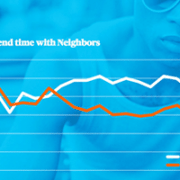
A study by City Observatory found that in 2012, nearly 35% of Americans reported never spending time with their neighbor compared to only about 20% in 1970.

Read more


https://longevity.stanford.edu/wp-content/uploads/2016/09/neighbor-1.png 200 360 admin https://longevity.stanford.edu/wp-content/uploads/2025/05/SCL-Logo-1-300x118.png admin2016-09-28 22:04:092017-02-03 23:40:03Do you know your next door neighbor?

This Assisted Living Facility Is Designed to Look Like a Neighborhood

September 2, 2016/in Social Engagement /by admin

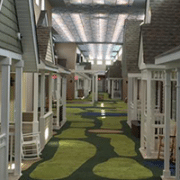
While you may not be able to relive your youth, a chain of assisted living facilities in Ohio is giving residents the opportunity to at least revisit the setting of their younger years—all in the name of health.

Read more

https://longevity.stanford.edu/wp-content/uploads/2016/09/assisted.png 200 360 admin https://longevity.stanford.edu/wp-content/uploads/2025/05/SCL-Logo-1-300x118.png admin2016-09-02 22:27:152017-02-03 23:40:28This Assisted Living Facility Is Designed to Look Like a Neighborhood

Want to Live Longer? Choose Family Over Friends

August 27, 2016/in family, Social Engagement /by admin

Maybe blood really is thicker than water. A recent study from the University of Chicago found that people who had close relationships with family members lived longer than those who had close relationships with friends. Researchers with the National Social Life, Health, and Aging Project, which surveyed around 3,000 people born between 1920 and 1974, asked participants who were between the ages of 57 and 85 to list up to five people they are close with. Five years later, when the researchers followed up, they found that people who included more family members in their list, as opposed to, say, friendships, were less likely to have died in the interim.

Read more

https://longevity.stanford.edu/wp-content/uploads/2017/05/familyVSfriends.png 200 360 admin https://longevity.stanford.edu/wp-content/uploads/2025/05/SCL-Logo-1-300x118.png admin2016-08-27 21:15:562017-05-18 21:16:13Want to Live Longer? Choose Family Over Friends

Longevity Bonus: Work Longer, Live Longer

June 3, 2016/in Social Engagement, working for pay /by admin

For some people, working well into their seventh to ninth decades anchors them to a fulfilling life. That’s, of course, if they love what they’re doing. I once knew a lawyer who worked until he was 102. For others, though, working hurls them down into a pit of despair. They may work for a wretched boss or company or be in an industry that’s dying. They may be physically unable to do the work. For those who are relatively healthy and engaged in their work, working well past traditional retirement age has its benefits: They may live longer.  According to a recent study cited by the Center for Retirement Research at Boston College:

Read more

https://longevity.stanford.edu/wp-content/uploads/2017/05/workLongerLiveLonger.png 200 360 admin https://longevity.stanford.edu/wp-content/uploads/2025/05/SCL-Logo-1-300x118.png admin2016-06-03 11:17:162017-05-08 11:17:39Longevity Bonus: Work Longer, Live Longer
Page 5 of 7«‹34567›»
 

© Copyright - Stanford Center on Longevity
  • Youtube
  • Linkedin
Scroll to top