
GAME CHANGER
The Librarian With a Business Plan for Well-Being
By Karen Fischer
With lots of imagination and a little money, a neglected rural library is transformed into a community health hub.
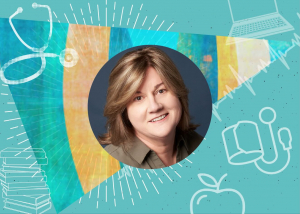 The first time Dianne Connery visited the Pottsboro Library in northeast Texas, paintballs were splattered outside. It was 2010, and local kids were accustomed to shooting out the windows of the little library with BB guns. The interior was stodgy and not particularly welcoming to children. The all-volunteer team ran the library without taxpayer funding, and its bank account was dwindling.
Connery had recently moved to the area from Dallas after a career with WeightWatchers and was floored by the difference between library resources available in a major city versus Pottsboro, which has a population of about 2,600. Some basic amenities, like internet access, were limited or nonexistent when she arrived.
Yet as a public space for connectivity, the Pottsboro Library, located in a low-income part of town where few residents owned cars or could afford internet access, was incredibly important. Connery had a vision for what the space could become. “Something about it sparked a passion in me,” she says. Before long, she was volunteering full-time as the library’s director, and was determined to make it solvent and transform the place from one that much of the community neglected to one that it couldn’t live without.
“We’re always battling against nostalgia. When people hear the word library, they think of fourth grade and checking out Charlotte’s Web,” she says. “They don’t think about the kinds of services we do now. It’s a constant barrier to overcome that.”
Libraries are a kind of Exhibit A of longevity readiness. As the Stanford Center on Longevity’s New Map of Life documents, places that serve a diversity of ages, offer lifelong learning, support life transitions, and provide access to technological and other advances can improve both the quality and quantity of years lived.
To Connery, Pottsboro felt ripe for such transformation. Residents are slightly poorer than those in the rest of the state and have an average life expectancy of 75, lower than the U.S. average of 78.4. Among its residents’ challenges are affordable housing, transportation and healthcare. Trained as a gerontologist, Connery previously ran a care practice for older adults and knew the importance of access to community resources housed at public libraries. “Because there are not a lot of services in our area, a lot of people will go back to Dallas when they age and have more medical needs,” she says.
Her idea was to find a way for people to have more services — medical, technological, communal — available to them locally.
Connery and her small team decided to first focus on health initiatives, including a community garden and pop-up book parties with snacks for children living with food insecurity. From 2010 to 2017, Connery says the library’s usage rate doubled. There were economic benefits, too. An analysis of foot traffic by Placer.ai showed that library patrons were coming from as far as 25 miles away, and they were running errands in town before and after visiting the library.
“I discovered that one person living in a rural community can make a big difference and impact the lives of people in a concrete way.”
During the Covid-19 pandemic, Connery realized the once dilapidated library had become a lifeline for the community. A regular patron called, not knowing how to log on for a telehealth visit with her neurologist. “She didn’t have a computer at home or the skills to use one, so I put her in my office with a laptop to connect her,” remembers Connery.
She secured a $20,000 grant from the National Institutes of Health National Library of Medicine, and in early 2021 her team created a telehealth booth in the library where people could speak privately with their doctors without having to travel. Connery also stocked the library with medical equipment such as wheelchairs and blood pressure monitors, which patrons check out much like a book, reducing their need to travel and buy the equipment themselves.
In October 2022, the Pottsboro Library was awarded another grant from the National Digital Inclusion Alliance to hire a full-time digital navigator to help residents develop digital literacy skills and to purchase computers and tablets for community use.
Now, Connery has her sights set on helping other rural libraries identify and fund their needs. She hosts webinars about Pottsboro’s programs that can be replicated elsewhere, such as providing one-on-one tech support and training digital navigators to make house calls.
In response, enthusiastic residents have pushed for more taxpayer funding of the library. The Pottsboro City Council recently approved a 50 percent increase for fiscal year 2025-26, giving Connery another $18,000 to work with.
Connery’s latest ambition is to help local residents learn about government, advocacy and civic engagement. She has secured a grant from the American Library Association to address democratic participation gaps in rural areas where civic infrastructure, such as local newspapers, is limited. “I discovered that one person living in a rural community can make a big difference and impact the lives of people in a concrete way,” says Connery.
KEEP READING
GAME CHANGER
The Librarian With a Business Plan for Well-Being
ALT/SHIFT
Does Your Financial Plan Cover These Risks?
DEEP DIVE
The Robots Are Coming (Don’t Panic)
GRANDPEOPLE
Bobbing Bubbe
FROM THE EDITOR
LONGEVITY LITERACY
Cumulative Social Advantage
FIVE QUESTIONS
Galit Nimrod on the World’s Largest Retirement Community
@SCL:
Century Summit
Fellow Profile: Mike Kinney
SCL in the News: The Best Years of Your Life Are Probably Still Ahead

