
FROM THE EDITOR
 The beginning of a new year is a fitting time to imagine what’s next.
In 1999, a book previewing the 21st century, Gray Dawn by Pete Peterson, opened with this: “There’s an iceberg dead ahead. It’s called global aging and it threatens to bankrupt the great powers.” Peterson, a financier and philanthropist, ranked “the graying of the developed world’s population” as the ultimate force shaping the new century — more powerful even than climate change, the proliferation of nuclear, chemical, and biological weapons, terrorism and deadly superviruses, the aftershocks of globalization, and political and ethnic conflicts.
Though I quibble with his framing of longer lives as being among the “great hazards,” Peterson was prescient about a few 21st-century horribles. A former commerce secretary in the Nixon administration and noted deficit hawk, Peterson conceded that longevity wasn’t all bad, but he fixated on fiscal risks. “Graying means paying,” he asserted. “Paying for pensions, for hospitals, for doctors and nurses, for nursing homes and related social services.”
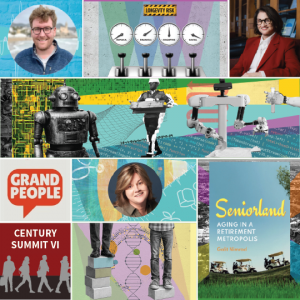
It’s a safe bet Peterson didn’t envision the advances transforming aging: exoskeletons, 3-D printed organs or magnet-controlled, micro-robots that can travel a patient’s bloodstream breaking up clots or delivering precision-engineered medicine. You’ll read about these and other marvels with the potential contribute to extended healthspan and independence in Laura Holson’s deep dive into the Stanford Robotics Center. This is where the future of aging is literally being invented. (My favorite assistive technology: the bed-making robot.)
As for Peterson’s contention that older adults present a drain on the economy, here too there is room for debate — and a paradigm shift. Because nearly half of workers aged 55 to 64 have no retirement savings, according to the Federal Reserve, and many underestimate the costs of their possibly very long lives, financial planners are developing new approaches to help people develop “longevity fitness,” MP Dunleavey reports. This holistic approach involves not only managing money, but showing clients how to stay healthier and more connected as they age.
The latter is evident in our debut “Five Questions” column, a new feature introducing readers to creative thinkers on longevity. In this issue, Richard Eisenberg interviews Galit Nimrod about her new book Seniorland: Aging in a Retirement Metropolis.
We see plenty of evidence that innovation need not cost a fortune. Read what a librarian in tiny Pottsboro, Texas, was able to do with an extra $18,000 from taxpayers and a handful of grants. She transformed a rundown library into a community center where residents can check out blood pressure cuffs and wheelchairs and families can harvest fresh produce from its garden.
As is so often the case with futurecasting, the scarcest resource is not money but imagination. SCL’s New Map of Life foresees a world where the future of aging is not without real challenges, but is also full of transformative possibilities. We will continue to share with our readers the emerging 21st-century story of longevity as it unfolds, skirting icebergs as we go.
We welcome your feedback. Please send your letters and story ideas to [email protected].
Happy New Year!
Karen Breslau
Editor
KEEP READING
GAME CHANGER
The Librarian With a Business Plan for Well-Being
ALT/SHIFT
Does Your Financial Plan Cover These Risks?
DEEP DIVE
The Robots Are Coming (Don’t Panic)
GRANDPEOPLE
Bobbing Bubbe
FROM THE EDITOR
LONGEVITY LITERACY
Cumulative Social Advantage
FIVE QUESTIONS
Galit Nimrod on the World’s Largest Retirement Community
@SCL:
Century Summit
Fellow Profile: Mike Kinney
SCL in the News: The Best Years of Your Life Are Probably Still Ahead