
FROM THE EDITOR
 There are books and advice columns galore for raising kids and teens, launching or switching careers, but the tips drop off for the second half of life. As a result, many feel alone in the unscripted chapters that previous generations did not experience — alone but together, seeking a path forward.
SCL’s New Map of Life is one informational tool. And in this month’s Deep Dive, SCL Ambassador Avivah Wittenberg-Cox offers another: her compelling guide for life’s “Four Quarters” and how to set their pace, shifting from a sprint mentality to a marathon, and reimagining new milestones along the way.
As Avivah writes, “the old map assumed life peaked in mid-adulthood, then faded quietly into irrelevance. But longevity has inserted an entirely new stage — and with it, an opportunity to rethink the narrative of the whole.”
The newness is especially palpable in life’s third quarter. Thanks to gains in health, longevity and education, for the first time in history, millions of adults in their fifties, sixties and seventies are thriving in a phase she calls the “new frontier” with the energetic expertise to re-create their lives.
What is becoming a vibrant growth stage for many can lead to the fourth quarter, harvest. Avivah describes this as a “phase of gentle influence — where mentoring, advising and storytelling shape the lives that follow.”
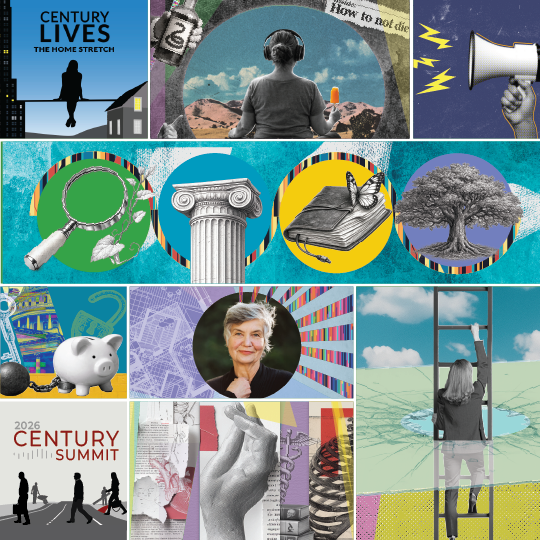
If you were fortunate enough to attend this year’s Century Summit convened by the Longevity Project in collaboration with the Stanford Center on Longevity, you got a taste of what life’s third quarter can look like. For two days at Stanford’s Graduate School of Education and online, we heard from experts and leaders from various fields who are rethinking how we develop and support talent across extended careers that may last a half-century or longer. Check out the recorded sessions to see why there is still no substitute for human wisdom and judgement, for the emotional intelligence it takes to lead a workplace and the people in it.
Of course, living well in these new chapters means tending to the places and spaces that hold us. This month’s Game Changer profiles architect Susanne Stadler, who leads the nonprofit At Home With Growing Older, helping people adapt their homes so they can age in place, on their own terms and with joy.
And living well also means making peace with the one inescapable fact of life. Our Alt/Shift column features “Being Mortal,” a novel course taught at Stanford Medical School by SCL co-director Deborah Kado and a geriatrician colleague. Their premise is that understanding life’s limits can help students become more effective and compassionate doctors. The sole text, not surprisingly, is Atul Gawande’s best-selling book of the same name.
So much of what we do at SCL feels theoretical. Increasingly, though, making sense and meaning — along with protecting health and finances — is the work of longevity.
Speaking of money, MP Dunleavey writes about the strides that women are making in breaking the financial glass ceiling, and at last catching up with men in earnings and savings. Thanks to better education, policy changes such as automatic enrollment in retirement plans, and “finfluencers” affecting how young women earn, save and plan for the future, the persistent gender wealth gap appears to be shrinking. If you’ve wondered whether the dreaded “widow tax” is still a thing, check out our Longevity Literacy column.
All of this gives us good reason to celebrate — preferably with dessert. Dr. Ezekiel Emanuel, the preeminent public health expert, is featured in Richard Eisenberg’s Five Questions. Emanuel shares his cheeky take on longevity, Eat Your Ice Cream: Six Simple Rules for a Long and Healthy Life, reminding us that simple pleasures matter — and to turn down the volume on the “wellness industrial complex” and its legions of marketers.
Settle in with a cup or a cone of your favorite flavor and enjoy this month’s issue!
Yours in delight,
– Karen Breslau
KEEP READING
FIVE QUESTIONS
Dr. Ezekiel Emanuel Says Ignore the “Wellness Industrial Complex”
GAME CHANGER
Joy is Architect’s Key for Aging in Place
ALT/SHIFT
Being Mortal: Medicine’s Most Vital Lesson?
DEEP DIVE
From Sprint to Marathon: Mapping Four Quarters of the 100-Year Life
CENTURY LIVES
“The Forgotten Middle”
FROM THE EDITOR
FINANCING LONGER LIVES
Breaking the Financial Glass Ceiling
LONGEVITY LITERACY
The Widow Tax
@SCL:
Century Summit VI
Call for Case Studies