FIVE QUESTIONS
Dr. Ezekiel Emanuel Says Ignore the “Wellness Industrial Complex”
By Richard Eisenberg
The author of Eat Your Ice Cream: Six Simple Rules for a Long and Healthy Life on what really matters — and why you shouldn’t retire.
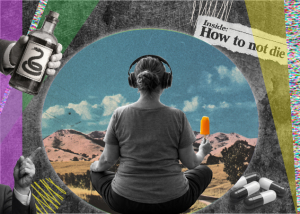
Renowned health expert Ezekiel Emanuel, MD, PhD, is co-director of the University of Pennsylvania Healthcare Transformation Institute, an oncologist, a bioethicist and an architect of the Affordable Care Act. But he may be best known for his 2014 article in The Atlantic saying he hoped to die at 75 and wouldn’t try to prolong his life beyond that age because he feared dementia. (At 68, he now says Covid has led him to amend this view; he’d get the vaccine after 75 to decrease the risk of dying, hospitalization or complications.)
Recently, the medical provocateur wrote a cheeky take on longevity: Eat Your Ice Cream: Six Simple Rules for a Long and Healthy Life. In it, Ezekiel — brother of likely Democratic presidential candidate Rahm and Hollywood agent Ari — takes on what he calls the “wellness industrial complex” and its legions of influencers and marketers.
This interview has been edited for length and clarity.
You say in your book that the “wellness industrial complex” promises us more time to enjoy the future, but also demands a lot of our time. What is it, and how can we cut through the misinformation and hype in the longevity space?
The wellness industrial complex comprises influencers, TikTok people, writers of books, sellers of potions and medical tests and exercise stuff. You don’t have to follow all that.
They’re selling you something expensive, and I think a lot of what they say is unsupported by data, overemphasizing narrow aspects of wellness. Food, exercise and sleep are definitely part of wellness, but that’s not all there is. I would say none of those are the most important aspect of wellness, which is social interaction.
Why are social relations so important in the quality and the length of our lives?
We are social beings, and that means that when we interact with other people, it’s essential to who we are. That’s not just good psychologically, it’s good physiologically in the brain, leading to the release of the neurotransmitter serotonin — the so-called happiness reward. People who don’t interact socially have genes correlated with higher levels of stress.
The U.S. government’s Health and Retirement Study looking at people over 50 found that those who had multiple and rich social relationships were 24 percent less likely to die. We have a lot of data that social interactions lead to better health, longer life and happiness. So, it’s not Zeke Emanuel saying social interactions are important for wellness; it’s thousands of years of evolution saying it.
You say we naturally want to maximize the chances of living not just more years but living those years with vigor. How can we do that?
Aerobic exercise for the heart and lungs. Strength training for the muscles, which is especially important for people in the second half of life; after 55, we lose a lot of muscle mass. Balance and flexibility, so you don’t trip and break your hip. All of those are important. You want to do them on a regular basis, but you don’t have to do them every day. I don’t ride a bike every day; I’ll do it three or so times a week. Do something three or four times a week and it becomes a habit. If you’re spending 10 hours exercising, you’re not spending time with your kids or doing other things that are going to benefit you.
You have to keep your brain active. For more than a decade, I’ve committed myself to learning something new every year. In 2025 it was making honey, and I ended up with award-winning honey. You can take up pottery or paint or learn an instrument. You’ve got to challenge different parts of the brain; that’s why learning a language works well. You use your mouth, you have to translate in your brain, you have to read the words and use your visual cortex. I just talked to Walter Isaacson, who’s working on a biography of Marie Curie, and he said, “I’ve been learning French for the last four years.”
Figure out the thing you want to start with. If you feel you’re not getting enough exercise, start with exercise. If you think you need to eat better, start there. If it’s social relations, enhance your social relations — pick up the phone and call your sibling or a dear friend.
You say your most controversial recommendation to slow cognitive decline is not to retire, especially if your job is mentally challenging and socially engaging. Why shouldn’t people retire?
What happens at a job? You’ve got to be organized, interact with people, and solve problems. Those are important to keep your brain functioning well. One of the problems when people retire is they often do it without a lot of planning about how they’re going to keep their brain engaged. They stop working 40 hours a week and start watching TV for 40 hours.
So, one of the big questions is: What are you substituting for work? Are you volunteering? Are you taking on a new hobby? Are you finding new experiences that are challenging? I’m not saying that everyone should work forever. But you have to think about how you’re going to get mental stimulation and social interactions when you retire.
Are you still planning to have a living memorial service when you turn 75?
A hundred percent. I am going to invite everyone who knows me, and we’ll find people who will tell stories about their experience of me at various points of my life. I don’t know why I should have to wait to be dead to hear those great stories.
I think this idea of waiting until someone’s dead for us to review their life and talk about them is a missed opportunity.
Richard Eisenberg is an “unretired” journalist and podcaster specializing in longevity, work, money and retirement. He writes “The View From Unretirement” column for MarketWatch.
KEEP READING
FIVE QUESTIONS
Dr. Ezekiel Emanuel Says Ignore the “Wellness Industrial Complex”
GAME CHANGER
Joy is Architect’s Key for Aging in Place
ALT/SHIFT
Being Mortal: Medicine’s Most Vital Lesson?
DEEP DIVE
From Sprint to Marathon: Mapping Four Quarters of the 100-Year Life
CENTURY LIVES
“The Forgotten Middle”
FROM THE EDITOR
FINANCING LONGER LIVES
Breaking the Financial Glass Ceiling
LONGEVITY LITERACY
The Widow Tax
@SCL:
Century Summit VI
Call for Case Studies