

• Youtube
  • Linkedin
Stanford Center on Longevity
  • ABOUT
    • GENERAL
      • About SCL
      • Annual Reports
      • Contact
    • PEOPLE
      • Leadership, Scholars & Staff
      • New Map of Life Impact Fellows
      • Faculty Affiliates
      • Advisory Council
      • SCL Ambassadors
    • AFFILIATED CENTERS
      • Stanford Distinguished Careers Institute
      • Glenn Foundation for Medical Research
      • Stanford Lifestyle Medicine
  • RESEARCH & INNOVATION
    • The New Map of Life Initiative
    • Postdoctoral Fellows Program
    • The Futures Project on Education and Learning for Longer Lives
    • The Sightlines Project
    • Longevity Design Challenge
    • Publications
  • MEDIA & EVENTS
    • SCL Magazine
    • Longevity Book Club
    • Century Summit
    • Century Lives Podcast
    • SCL in the News
    • Videos
  • ENGAGEMENT OPPORTUNITIES
    • Press inquiries
    • Postdoctoral Fellowship application
    • Industrial Affiliates Program
    • Stanford Courses
    • Make a gift
  • Search
  • Menu

Feeling Younger Could Mean Your Brain is Aging More Slowly

June 7, 2018/in Social Engagement /by admin
https://longevity.stanford.edu/wp-content/uploads/2018/10/feelingYounger.png 200 360 admin https://longevity.stanford.edu/wp-content/uploads/2025/05/SCL-Logo-1-300x118.png admin2018-06-07 10:53:552018-10-17 10:57:53Feeling Younger Could Mean Your Brain is Aging More Slowly

College freshmen turn to empathic people in stressful times, Stanford study says

August 30, 2017/in Friends, Social Engagement /by admin
https://longevity.stanford.edu/wp-content/uploads/2017/08/Freshman.png 200 365 admin https://longevity.stanford.edu/wp-content/uploads/2025/05/SCL-Logo-1-300x118.png admin2017-08-30 14:19:022017-08-30 14:19:02College freshmen turn to empathic people in stressful times, Stanford study says

Neuroscience Says Workplace Happiness Comes Down to Experiencing This Emotion Daily

August 9, 2017/in Social Engagement, working for pay /by admin
https://longevity.stanford.edu/wp-content/uploads/2017/08/working.png 200 365 admin https://longevity.stanford.edu/wp-content/uploads/2025/05/SCL-Logo-1-300x118.png admin2017-08-09 11:06:502017-08-09 11:06:50Neuroscience Says Workplace Happiness Comes Down to Experiencing This Emotion Daily

8 Powerful Ways to Turn Loneliness Into Deep Connection

August 9, 2017/in Social Engagement /by admin

Loneliness hurts. Most of us have experienced this. With the advent of technology and social media and the ever-increasing speed of life we may feel more connected in some ways but on the other hand “human moments” of actual face-to-face exchange without interruption can become more rare. A sociological study shows that disconnect seems to be on the rise with 1 out of 4 Americans feeling like they have no one to talk to about personal problems. Loneliness is the leading reason people seek out therapy and one study suggests that loneliness is a risk factor for mortality.

Read more

https://longevity.stanford.edu/wp-content/uploads/2017/08/lonliness.png 200 365 admin https://longevity.stanford.edu/wp-content/uploads/2025/05/SCL-Logo-1-300x118.png admin2017-08-09 10:53:012017-10-04 15:39:088 Powerful Ways to Turn Loneliness Into Deep Connection

Increased Caregiving Needed as Adults Near End of Life, Study Says

July 11, 2017/in caregiving, Social Engagement /by admin

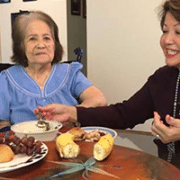
Researchers at Mount Sinai School of Medicine found that dying adults require twice as many hours of care per week compared to those not near the end of life. A recent study, published in the July edition of Health Affairs, at the Icahn School of Medicine at Mount Sinai showed that end-of-life caregivers were more likely to have physical difficulty related to providing care to end-of-life patients. Approximately 2.5 people on average act as caregivers to older adults nearing the end of life in the United States. Researchers used the National Health and Aging Trends study linked to the National Study of Caregivers to analyze trends in end-of-life caregiving in the United States and found adults nearing the end of life received 61.3 hours of aid per week compared to 35.5 hours per week for older adults not nearing the end of life.
Read more

https://longevity.stanford.edu/wp-content/uploads/2017/07/upiCaregiving.png 200 360 admin https://longevity.stanford.edu/wp-content/uploads/2025/05/SCL-Logo-1-300x118.png admin2017-07-11 14:58:222017-07-24 14:58:42Increased Caregiving Needed as Adults Near End of Life, Study Says

Hawaii Passes Law to Erase Responsibility of Elder Care

July 11, 2017/in caregiving, Social Engagement /by admin

Hawaii last week passed legislation that will provide working family caregivers with financial assistance to help pay for costs associated with caring for their elders. The Kupuna Caregivers Act, signed Thursday by Hawaii Gov. David Ige, is the first of its kind in the nation, Janet Kim, communications director for Caring Across Generations (CAG), a home care policy advocacy group, told NBC News. It provides qualified caregivers with a voucher of up to $70 per day that can be used toward services that they would otherwise perform themselves, including adult day care and assisted transportation.


Read more

https://longevity.stanford.edu/wp-content/uploads/2017/07/hawaiiCaregiving.png 200 360 admin https://longevity.stanford.edu/wp-content/uploads/2025/05/SCL-Logo-1-300x118.png admin2017-07-11 10:59:472017-07-24 11:00:11Hawaii Passes Law to Erase Responsibility of Elder Care

The Missing Men

June 28, 2017/in Sightlines Financial Security, Social Engagement, Working for Pay /by admin
https://longevity.stanford.edu/wp-content/uploads/2017/06/construction-worker.png 200 365 admin https://longevity.stanford.edu/wp-content/uploads/2025/05/SCL-Logo-1-300x118.png admin2017-06-28 09:09:382017-06-29 09:12:01The Missing Men

Alzheimer’s Caregivers: Isolated and Needing Help

June 1, 2017/in caregiving, Social Engagement /by admin

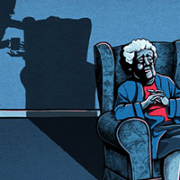
Fifteen million Americans care for a loved one with Alzheimer’s or another dementia, and two-thirds of them feel isolated or alone in that difficult endeavor. That’s one finding of a survey released today by the Alzheimer’s Association, which also revealed that 84% of the caregivers would like more support in their efforts.

“It’s a problem that’s only going to get worse,” said Ruth Drew, director of family and information services for the Alzheimer’s Association, in a statement.
Read more

https://longevity.stanford.edu/wp-content/uploads/2017/07/forbesCaregiving.png 200 360 admin https://longevity.stanford.edu/wp-content/uploads/2025/05/SCL-Logo-1-300x118.png admin2017-06-01 15:06:542017-07-24 15:07:15Alzheimer's Caregivers: Isolated and Needing Help

If You Have No Children, Who Will Care For You When You’re Old?

May 12, 2017/in family, Social Engagement /by admin

Few of us are immune from the anxiety that can quickly set in when we contemplate our own ageing. Who will be there for us when us can no longer physically take care of ourselves? Who will be around to remind us of who we were in our moments of lucidity when our minds have started slipping away? For those of us who don’t have children, these questions take on a particular significance. I had mixed feelings after watching Still Alice, an Oscar-winning depiction of early-onset dementia. It made for grim viewing. But it was easy to imagine the ways it could have been even grimmer: what if the protagonist, Alice, had no children, a partner long departed or divorced, or friends who had drifted away?

Read more

https://longevity.stanford.edu/wp-content/uploads/2017/05/childrenForCare.png 200 360 admin https://longevity.stanford.edu/wp-content/uploads/2025/05/SCL-Logo-1-300x118.png admin2017-05-12 21:21:412017-05-18 21:21:59If You Have No Children, Who Will Care For You When You're Old?

Why Isn’t Business Preparing More for the Future of Aging?

May 9, 2017/in Social Engagement, working for pay /by admin

It’s no secret that Americans are living longer and working longer or that both trends are likely to continue. People over 65 made up 13% of the U.S. population in 2000; they’re expected to be 20% by 2030. AARP estimates that Americans over 50 now spend $7.1 trillion annually and, as their numbers grow, that figure will more than double, to $15 trillion by 2020. So why aren’t American businesses preparing better for the future of aging, to serve their employees and their customers? And what should they be doing?

Read more

https://longevity.stanford.edu/wp-content/uploads/2017/05/workingolder.png 200 360 admin https://longevity.stanford.edu/wp-content/uploads/2025/05/SCL-Logo-1-300x118.png admin2017-05-09 12:48:422017-05-17 12:49:00Why Isn't Business Preparing More for the Future of Aging?
Page 2 of 7‹1234›»
 

© Copyright - Stanford Center on Longevity
  • Youtube
  • Linkedin
Scroll to top