DEEP DIVE
Why the “Good Death” Is Having Its Moment
By Laura M. Holson
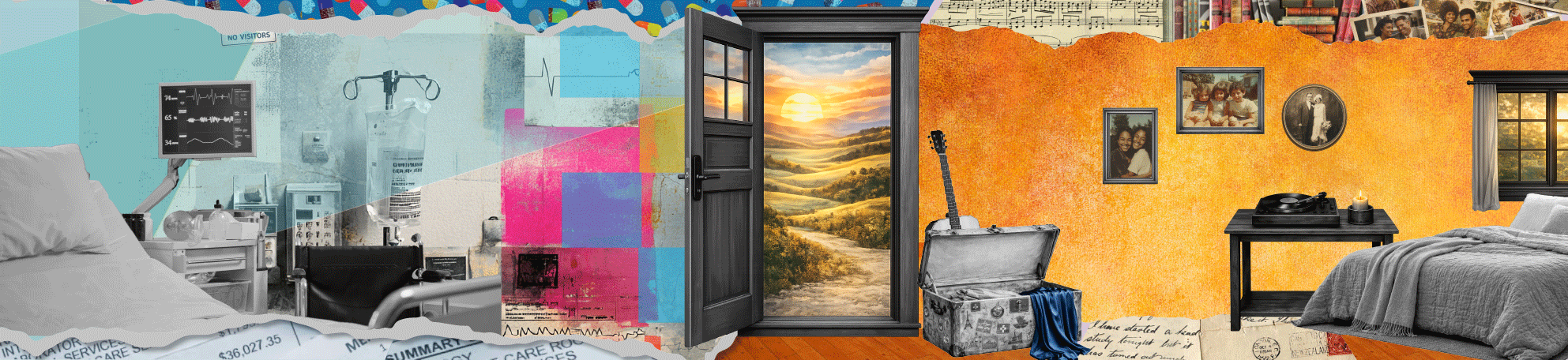 Death doulas, death cafés and candid conversations are reshaping how we face life’s end.
To hear Francesca Arnoldy tell it, birth and death have striking similarities. A community doula and death literacy educator based in Vermont, Arnoldy spent years guiding expectant mothers through the arrival of new life. In 2015, however, she shifted her focus to help people face their final days. The change came after a period of personal loss when, in short order, her grandfathers, father-in-law and her favorite Labrador died.
Arnoldy’s practice has expanded dramatically since she attended her first hospice volunteer training program in 2016. Over the past decade, she has trained other death doulas and published four books on death, community and grief, with a fifth on the way. She created a curriculum for a death doula certificate program at the University of Vermont. And she teaches students at Middlebury College to use storytelling as a way to talk about death and the vulnerability of being human. Death, like birth, is a mysterious passage, she says, one with its own rhythms and uncertainties that asks those present “to meet the moment.”
Even as lifespans grow longer, no one — neither the data-driven wellness influencers nor the technologists seeking to conquer biology and become immortal — has managed to hack life’s ultimate truth: It comes to an end. Arnoldy is one of the growing number of death doulas and others who have tapped into a desire among people seeking guidance through life’s final passage. Their ranks have grown sixfold between 2019 and 2024, from 260 to roughly 1,600, according to industry reports, reflecting a larger cultural shift around what it means to have a good death; that is, a peaceful passage not dominated by pain or fear that gives the dying person more agency over their last days. “Medicine has long held to a sort of Enlightenment point of view that death is a problem, and if we work hard enough, we can solve it,” says BJ Miller, a palliative medicine physician and coauthor of A Beginner’s Guide to the End. He advocates for changing the prevailing medical culture that contends “death is a thing that takes life, not part of life.”
Arnoldy and Miller agree that accepting one’s mortality can bring about a more meaningful life. And scores of people are choosing to explore death, or to sit with the grief that follows, at death-themed cafés and open mic nights and through writing end-of-life letters. “This might be what helps us gather back together, to recognize our shared humanity, our shared mortality, our shared common struggles, so we find our way back to connection,” says Arnoldy of the cultural shift.
KEEP READING
FIVE QUESTIONS
Allison Pugh on the Bonds That Sustain Us
ALT/SHIFT
Economic Mobility Is Intergenerational
FINANCING LONGER LIVES
You Need a Financial Longevity Planner
DEEP DIVE
Why the “Good Death” is Having its Moment
GRANDPEOPLE
Raves for DJ in her 60s
GAME CHANGER
Scott Delp: Movement As Medicine
LONGEVITY LITERACY
Fluid v. Crystalized Intelligence
@SCL:
Design Challenge Finals
A Big Data Analysis of Career Gaps
Financial Advice in the Age of Longevity