ALT SHIFT
Being Mortal: Medicine’s Most Vital Lesson?
By Sarah Pollock
A novel Stanford course teaches students how understanding life’s limits can help them become better doctors.

What makes life worth living?
It’s an age-old question that some three dozen students enrolled in “Being Mortal: Medicine, Mortality, and Caring for Older Adults” are considering during a lunchtime seminar at the Stanford School of Medicine.
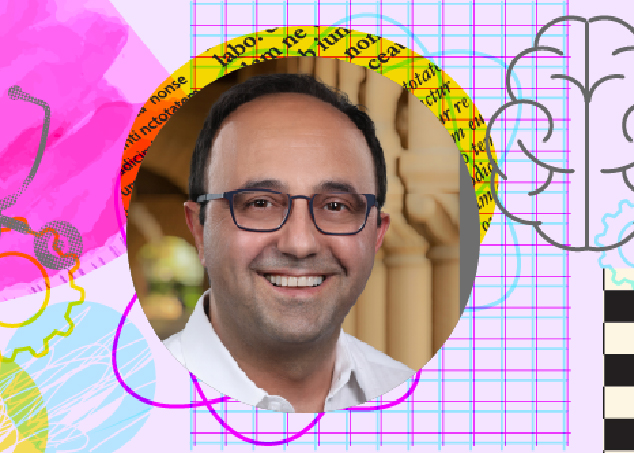
The guest speaker is Dr. Tyler Johnson, a medical oncologist at Stanford Health Care who hosts The Doctor’s Art, a podcast about his work treating patients with terminal cancer. “It’s a sobering thing to take care of patients who are dying,” Johnson tells the students. “The irony is that thinking a lot about dying puts you in a head space and a heart space to think about what makes life worth living and how to build a meaningful life.”
He asks the group to spend a few minutes coming up with changes that would make their lives more meaningful. The students offer ideas about using time more intentionally, deleting social media accounts and deepening their relationships with friends and family. Johnson shares his own changes, which include kneeling at the bedside of patients to meet them at eye level and to signal reverence and equality.
The course, MED 296, represents an unusual injection of humanism into a jam-packed medical curriculum. The seminar, open to undergraduates as well as to medical and physician assistant students, is the brainchild of Stanford Medicine geriatricians Deborah Kado and Matthew Mesias. The only text is Being Mortal: Medicine and What Matters in the End, the 2014 bestseller by surgeon and author Atul Gawande, who critiques modern medicine’s focus on prolonging life at the expense of quality of life.
Most students will not specialize in geriatric medicine, Mesias says, “but all of them will probably care for an older person in some way, unless they’re a pediatrician. We want to give them some tools [to get them] thinking about aging and death and dying in a different way.”
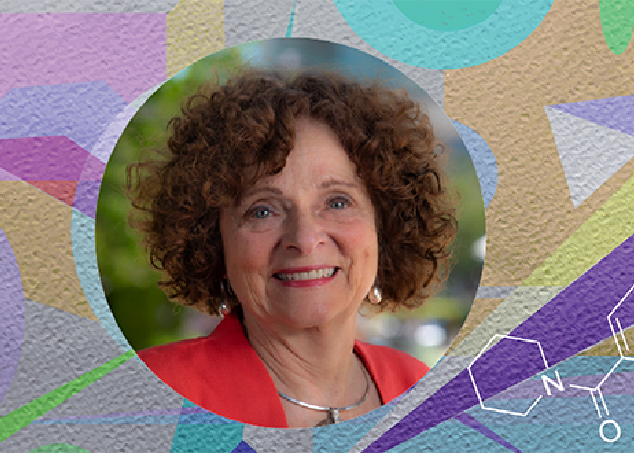
Kado, a co-director at the Stanford Center on Longevity, says the course is part of a broader effort to introduce concepts of longevity and healthy aging to medical students, who typically receive only four hours of geriatrics during their four-year curriculum and might otherwise start their medical careers ill-equipped to serve the needs of many of their patients.
Kado starts each quarter with a primer on changing demographics, longer lifespans and the role of a geriatrician. And she challenges students to consider whether they believe aging is a disease (about 12% of her audiences do, according to Kado) or a phase of life. This quarter, she and Mesias invited students to think through clinical and ethical decisions of cases in real time, one involving a woman who faced metastatic cancer in the final stage of pregnancy, another a patient with dementia who came to the class with her caregiver husband. There were seminars on the brain science of aging, stigmatizing death, how to have conversations about serious illness with patients and their families, and caring for neurodivergent patients.
As the course has grown, Kado says some students describe it as the most meaningful course they have taken in medical school. She hopes it can help to close significant knowledge gaps medical students have about how to treat older patients. In 2023 and 2024, Kado and SCL Fellow Apoorva Rangan queried graduating Stanford Medicine students by using a geriatrics knowledge assessment tool and a geriatric attitude scale, and found that overall students performed poorly. Furthermore, students with the lowest scores tended to report more negative impressions of older adults.
Kado and Rangan have since refined and expanded their research to include an updated geriatric medical knowledge assessment, the Age-Friendly Knowledge Assessment Tool (AF-KAT) and included a broader range of students from four different medical schools: Stanford, Harvard, the University of Washington, and UTHealth Houston. Among 275 graduating medical students queried in 2025, the results mirrored earlier samples, with only about 25 percent achieving a typical medical school test passing score. But there was also good news: Students who reported more curricular exposure to geriatrics and more positive attitudes about aging tended to score higher than students who did not. These latest results reveal areas in which medical educators can develop curricula to enhance geriatric medical knowledge, Kado says.
As Stanford’s School of Medicine conducts a major overhaul of its curriculum, Kado is advocating for the multifactorial approach of geriatric medicine; for example, considering how a patient’s cognition, mobility and medications might interact, to be applied more broadly to training future doctors. “The principles that we use to treat older adults are not so different from the holistic approaches that we should use to take care of everybody who’s ill,” says Kado, “and we should realize that disability can occur at any time in the spectrum of life.”
Sarah Pollock is a writer based in Oakland, California, and a contributing editor to SCL Magazine.
KEEP READING
FIVE QUESTIONS
Dr. Ezekiel Emanuel Says Ignore the “Wellness Industrial Complex”
GAME CHANGER
Joy is Architect’s Key for Aging in Place
ALT/SHIFT
Being Mortal: Medicine’s Most Vital Lesson?
DEEP DIVE
From Sprint to Marathon: Mapping Four Quarters of the 100-Year Life
CENTURY LIVES
“The Forgotten Middle”
FROM THE EDITOR
FINANCING LONGER LIVES
Breaking the Financial Glass Ceiling
LONGEVITY LITERACY
The Widow Tax
@SCL:
Century Summit VI
Call for Case Studies