
@ SCL | João Souto-Maior
A Big Data Analysis of Career Gaps
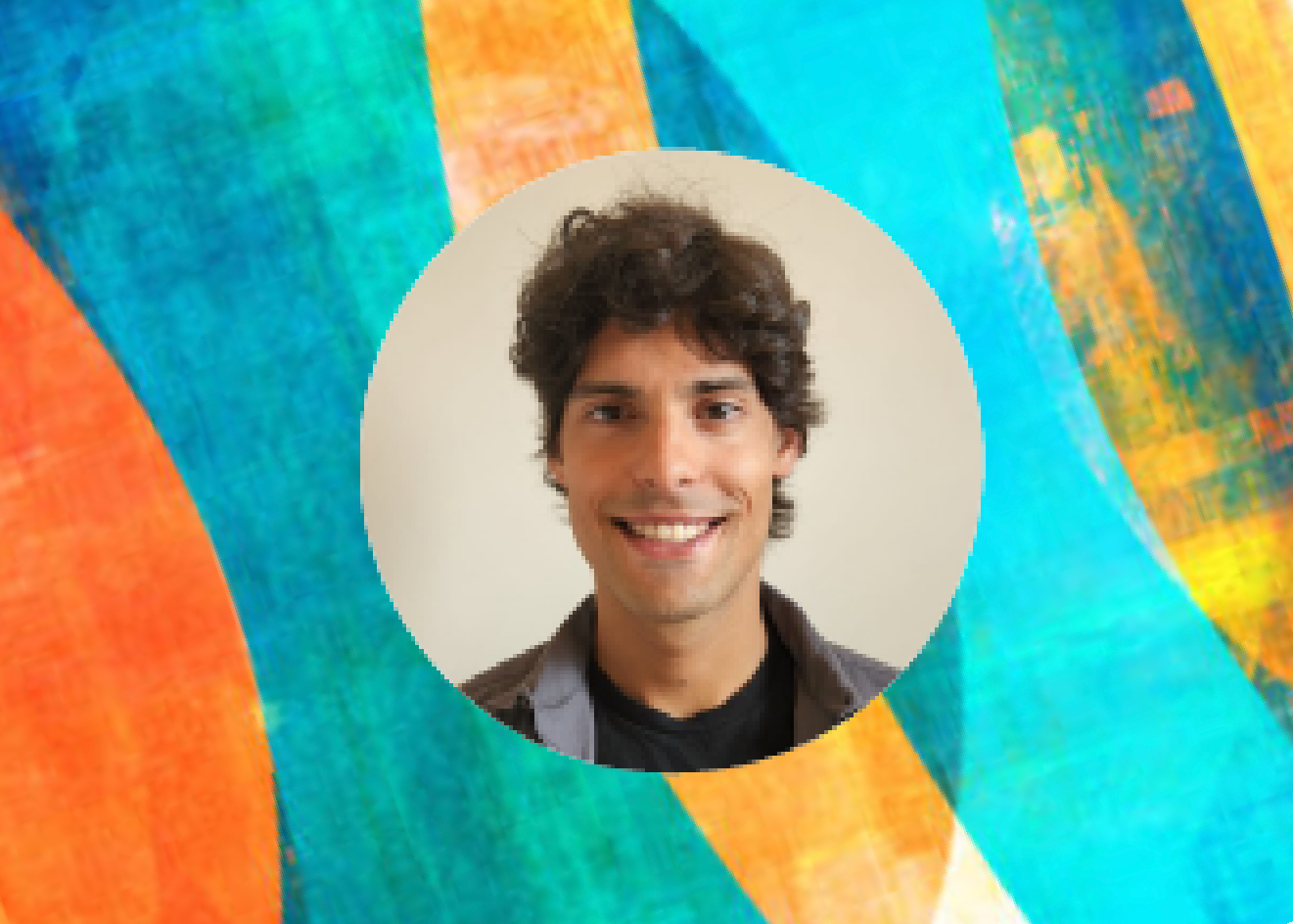 Growing up in São Paulo, Brazil, João Souto-Maior saw drastic economic inequality in his country’s educational system. And when he came to the United States to study economics at the University of Wisconsin-Madison, he saw similar patterns.
“I was, from the start of my undergraduate studies, interested in studying the mechanisms that drive economic disparities,” he says. At New York University, Souto-Maior wrote a paper from his dissertation on how inequality persists in education even when behaviors are race-neutral. His computational analysis focused on “opportunity hoarding,” a concept from sociology that describes how advantaged groups secure and pass on advantages to their children, thereby limiting access to resources and opportunities for other groups.
This led him to Stanford, where he is completing a two-year postdoctoral fellowship at the Center on Longevity investigating the consequences of “career pauses” that happen when a person steps away from the workplace for caregiving, education, health issues or other life events. With his adviser Mitchell L. Stevens, a professor in Stanford’s Graduate School of Education and a co-director of SCL, and through a partnership with the Burning Glass Institute, a nonprofit research center focused on the future of work, Souto-Maior is analyzing data on the career trajectories of millions of U.S. workers to understand the consequences of career gaps and how they differ among different types of workers, occupations and firms.
Souto-Maior’s research has uncovered some sobering findings. For example:
- Career gaps result in slower wage-growth trajectories, especially for women.
- The penalty for a career gap is highest for top earners.
- Occupations and firms that penalize gaps more heavily also tend to lose more workers over time — “a pattern that may indicate these high-penalty environments are losing talent,” Souto-Maior says.
“Workers need accessible ways to upskill and adapt as the labor market changes, as well as systems that actually reward their abilities and investments in learning,”
These findings are central to Stanford’s Learning Society initiative, led by Stevens, which advocates for a transformation of the United States from a “schooled society” in which education is confined to the K-12 and college years to a “learning society” in which career pauses and educational retraining are the norm. As working lives lengthen and career gaps become more common, Souto-Maior hopes the Learning Society research will motivate educational and workforce policy changes as well as help workers better anticipate the costs of gaps.
“Workers need accessible ways to upskill and adapt as the labor market changes, as well as systems that actually reward their abilities and investments in learning,” he says. “Right now, education is largely front-loaded in early life, and rewards are tied to credentials earned by early adulthood.”
—Tamara Straus is deputy editor of SCL Magazine.
KEEP READING
FIVE QUESTIONS
Allison Pugh on the Bonds That Sustain Us
ALT/SHIFT
Economic Mobility Is Intergenerational
FINANCING LONGER LIVES
You Need a Financial Longevity Planner
DEEP DIVE
Why the “Good Death” is Having its Moment
GRANDPEOPLE
Raves for DJ in her 60s
GAME CHANGER
Scott Delp: Movement As Medicine
LONGEVITY LITERACY
Fluid v. Crystalized Intelligence
@SCL:
Design Challenge Finals
A Big Data Analysis of Career Gaps
Financial Advice in the Age of Longevity