
DEEP DIVE
The School of Future Life
By Ken Stern
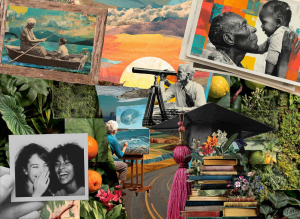 Even at 9:00 pm on a Thursday night, after a two-hour lecture, the auditorium buzzes with energy. Questions fly from the audience about healthy life expectancy, retirement age, lifelong learning and the challenges of an aging society, until finally the dean mercifully signals that the event has reached its end. I’d like to think it is my lecture that has everyone ginned up — who isn’t turned on by a talk about the American life expectancy disadvantage? But it’s a shade more likely that the excitement stems from the fact that this is the first schoolwide event for the brand new School of Future Life, at Kyungnam University in Changwon, Korea.
I can see right away that it’s not your typical university audience — maybe a hundred people, ranging in age from about 25 to 80, the majority landing in their 50s, 60s and early 70s. Welcome to Korea: the country at the epicenter of the movement to reinvent learning for longer, healthier lives.
Health Benefits of Lifelong Learning
As a species, we have gradually grasped that learning is important to cognitive health and can help ward off the scourges of late life, like Alzheimer’s and dementia. Less obvious, but equally important, is that learning can be critical to physical health as well. The physical benefits that flow from learning come less from what you know (although that matters) and more from the social and connective nature of the activity. Social engagement and connection, as I directly experienced in my visit to Changwon, are critical parts of the learning experience and have a direct and positive impact on our long-term health.
It sounds rather straightforward that we should be creating lifelong learning opportunities for our rapidly aging population, but in fact, in most countries, including our own, learning is still tied to educational models developed in the earliest years of the 20th century — when we determined that the first third of life could be dedicated to learning, and the rest of life dedicated to work and dying.
In the United States, we spend roughly $1.5 trillion on elementary, secondary and college education. By comparison, the federal government invests only about $675 million for adult education. There is of course a significant effort outside of the federal government on job training and reskilling — we have gradually caught on to the idea that what we learned in high school and college may not be terribly relevant 30 years on, when technology is replaced every 18 months — but job training generally stops with the job, leaving older adults divorced from any formal educational setting.
It’s a shame, because most adults over the age of 65 — 62% to be exact — identify themselves as lifelong learners, 83% connect learning with brain health and 68% think life becomes stagnant without lifelong learning. Yet most older Americans perceive the educational system as not for them, describing it as too expensive, elusive and difficult to navigate. Learning is healthiest when it is part of a collective, collaborative activity, but older Americans are forced to learn alone. More than three-quarters of the people who identify themselves as lifelong learners say their principal means of learning is “reading on their own.”
The Korean Model
It’s not that way in Korea. The right to lifelong learning is enshrined in the Korean Constitution, a sign of indebtedness to a generation that helped build postwar Korea but missed out on the windfall from the Korean economic boom. Korea, one of the longest-lived societies on earth and the country with the world’s lowest birth rate, has recognized that it cannot flourish if older generations are not active, engaged and purposeful, and access to lifelong learning plays a central role in meeting that goal.
“Korea, one of the longest-lived societies on earth and the country with the world’s lowest birth rate, has recognized that it cannot flourish if older generations are not active, engaged and purposeful, and access to lifelong learning plays a central role in meeting that goal.”
The School of Future Life — conceived of, funded by the Korean government and stood up in astonishingly rapid fashion over the course of a year — offers a range of courses, some on health and personal finance targeted at the older population, and others that fit a more traditional college curriculum. All this has produced a unique intergenerational student body. After my talk, two students approached me, a mother and daughter who had both enrolled at Kyungnam and were making plans to get their PhDs in education together after they had completed the initial degree. It’s a reflection of the wide-ranging, intergenerational, and social aspirations of the School of Future Life, supporting both students (like the daughter) who are at the front end of their careers and students (like the mother) who are charting second careers or are primarily interested in learning for its social, intellectual and health benefits.
Another example of Korea’s energetic embrace of longevity is its mania to create “lifelong learning cities.” About 170 Korean cities (out of a total of only 226 cities in the country) have created lifelong learning institutes that offer free or low-cost courses that are open to everyone, but are often tailored toward an aging population. Classrooms are distributed throughout a city so that instruction is easier for older learners to access.
In Osan, a small city of some 200,000 sitting in Seoul’s shadow, there are 216 “stepping stone” classrooms spread across the city in libraries, teahouses, community centers, and even stores, ensuring that virtually everyone can walk to a classroom if they so choose. The city’s annual Lifelong Learning Festival is among the city’s biggest celebrations, annually drawing tens of thousands of attendees to a combination of classes, lectures, and parties.
Korea’s commitment to lifelong learning is opening up opportunities in an aging nation. In the offices of the Osan Lifelong Learning Institute, I meet Park Ok Geum. Born in Daegu near the end of the Korean War, Park dreamed of a college education, but it was denied because of financial pressure and family commitments. When she retired and closed the family shop, she signed up for the fledgling Lifelong Learning Institute, taking courses ranging from literature to laughter therapy and eventually becoming a “delivery teacher,” leading classes around the city. Park tells me that her “back is small but [her] feet are wide.” That may lose something in translation, yet it reflects her sense that creating a whole new base of support and social connection has improved her life and has been critical in sustaining her in good health into her 70s.
The Korean vision of reinventing learning may be unique in the world right now, but the idea of rethinking the second half of life to be more engaged, purposeful and socially connected as a public health strategy is spreading. Last year, for my forthcoming book Healthy to 100: How Strong Social Ties Lead to Long Lives, I traveled across five of the world’s longest-lived and healthiest nations (Korea, Japan, Spain, Italy and Singapore) to understand their strategies for keeping aging populations healthy. These countries are relatively diverse from a longevity perspective: Some are wealthy, some are not; some have high rates of obesity, some do not; some have a fitness culture, and some do not. But what unites them is a shared understanding that the future health of their aging population relates directly to their ability to keep older citizens involved in the life of the community, and to rework cultural norms to ensure that the second half of life is perceived as being just as valuable, meaningful and worthwhile as the first.
By Ken Stern
This essay is adapted from “Healthy to 100: How Strong Social Ties Lead to Long Lives” (Hachette Book Group, on sale October 7, 2025). SCL Magazine readers can pre-order the book HERE and receive a 20% discount valid through October 6. Code: HEALTHY
Meet the author! Join us on November 5th @ 12 PM PT/3 PM ET for our November Longevity Book Club with Ken Stern! REGISTER NOW
KEEP READING
Test Your Longevity-Readiness: Create a Purpose Portfolio
Game Changer: Building Muscle for the Long Haul
Alt/Shift: Your Brain on Nostalgia
Longevity Literacy: Social Security’s Next 90 Years
Deep Dive: The School of Future Life
@SCL: Big Ideas in Medicine | In the News
GrandPeople: Old Dogs, New Tricks