• Link to Youtube
  • Link to LinkedIn
Stanford Center on Longevity
  • ABOUT
    • GENERAL
      • About SCL
      • Annual Reports
      • Contact
    • PEOPLE
      • Leadership, Scholars & Staff
      • New Map of Life Impact Fellows
      • Faculty Affiliates
      • Advisory Council
      • SCL Ambassadors
    • AFFILIATED CENTERS
      • Stanford Distinguished Careers Institute
      • Glenn Foundation for Medical Research
      • Stanford Lifestyle Medicine
  • RESEARCH & INNOVATION
    • The New Map of Life Initiative
    • Postdoctoral Fellows Program
    • The Futures Project on Education and Learning for Longer Lives
    • The Sightlines Project
    • Longevity Design Challenge
    • Publications
  • MEDIA & EVENTS
    • SCL Magazine
    • Longevity Book Club
    • Century Summit
    • Century Lives Podcast
    • SCL in the News
    • Videos
  • ENGAGEMENT OPPORTUNITIES
    • Press inquiries
    • Postdoctoral Fellowship application
    • Industrial Affiliates Program
    • Stanford Courses
    • Make a gift
  • Click to open the search input field Click to open the search input field Search
  • Menu Menu

RECOMMENDED READING

ADDING LIFE TO YEARS AND YEARS TO LIFE
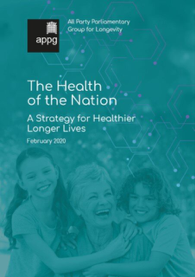
The UK government has set a goal of five more years of healthy life expectancy by 2035 and at the same time close the large social gap in healthy life expectancy. Currently in the UK, on average, women are living for 29 years in poor health and men for 23 years. A cross-parliamentary group has published a National Strategy for Healthier Longer Lives – a key message being to turn the “problem” of ageing into opportunities. The report shows a shocking current picture pointing, for example, to data indicating 70% of people over 55 will have at least one obesity related disease by 2030. But prevention of premature ill-health is possible with collective policy, technology and interdisciplinary action by business, central and local government, academia, charities and individuals themselves. For example, the UK has set up a National Academy for Social Prescribing to promote the benefits of non-clinical approaches to healthier living and ageing.

The report’s recommendations are supported by 10 research papers on the following topics written by policy and academic advisers:

  • Social determinants of health
  • Health inequalities
  • Making it easier to live well: addressing the behavioural and environmental drivers of ill health
  • National leadership for achieving the five extra healthy years
  • Local systems and grand ageing challenge goals
  • A service for national health – an NHS fit for 2035
  • Measuring national healthy lifespan
  • Business as key stakeholder in health
  • Economic and scientific case for therapeutic intervention in ageing
  • Science and technology
Learn More

This report was recommended by Julia Randell-Khan, Fellow at the Stanford Center on Longevity.


© Copyright - Stanford Center on Longevity
  • Link to Youtube
  • Link to LinkedIn
Link to: Are people in their 70s healthy enough to run the country? Yes. – <em>The Washington Post</em> Link to: Are people in their 70s healthy enough to run the country? Yes. – <em>The Washington Post</em> Are people in their 70s healthy enough to run the country? Yes. – The... Link to: GSB course on longevity teaches students about workforce re-entry – <em>Stanford Daily</em> Link to: GSB course on longevity teaches students about workforce re-entry – <em>Stanford Daily</em> GSB course on longevity teaches students about workforce re-entry – Stanford...
Scroll to top Scroll to top Scroll to top