
Stanford Center on Longevity Announces Eight Finalist Teams for 13th Annual Global Design Challenge
The Stanford Center on Longevity is excited to announce eight finalist teams for its 13th Annual Longevity Design Challenge. This year’s challenge, “Prevention by Design: Creating Healthy Lifestyles for Long Lives,” inspired creative solutions from university students around the world that address preventive health across the life course, spanning physical, mental, and social wellbeing, and emphasizing lifestyle factors such as nutrition, movement, and cognitive health.
Here are the 2026 Finalists, listed in alphabetical order:
Decisio (Singapore Management University, & National University of Singapore, Singapore) – An app that helps teens with ADHD reduce cognitive overload
Heelia (Cornell University, USA) – A low-cost hardware and software solution designed for at-home bone health monitoring
Neevel (Universidade Federal do Rio Grande do Sul, Brazil & University of North Carolina at Charlotte, USA) – An insole and hub system that combines gait screening with guided daily exercises for fall prevention
PhoroVis (University of Texas at Austin, USA) – A low-cost phoropter alternative that determines eye prescriptions
Shenergy (BITS Design School, India) – A school-based preventive health program that helps adolescent girls lower long-term PCOS risk
Suno (Pratt Institute, USA) – A voice-first AI health service for rural India that provides diabetes prevention support
Uma Tumbuh Sehat (Royal College of Art, UK & Institut Teknologi Bandung, Indonesia) – A program that combats child stunting in rural Indonesia through nutrition education for households
Zuca (Stanford University, USA) – High-fiber snacks made with upcycled fruit pulp for individuals with type 2 diabetes
This year, the competition received nearly 250 submissions from more than 30 countries, showcasing the exceptional creativity and talent of student designers globally. These eight finalist teams were selected by a distinguished panel of expert judges (listed below) from academia, industry, and the non-profit sector.
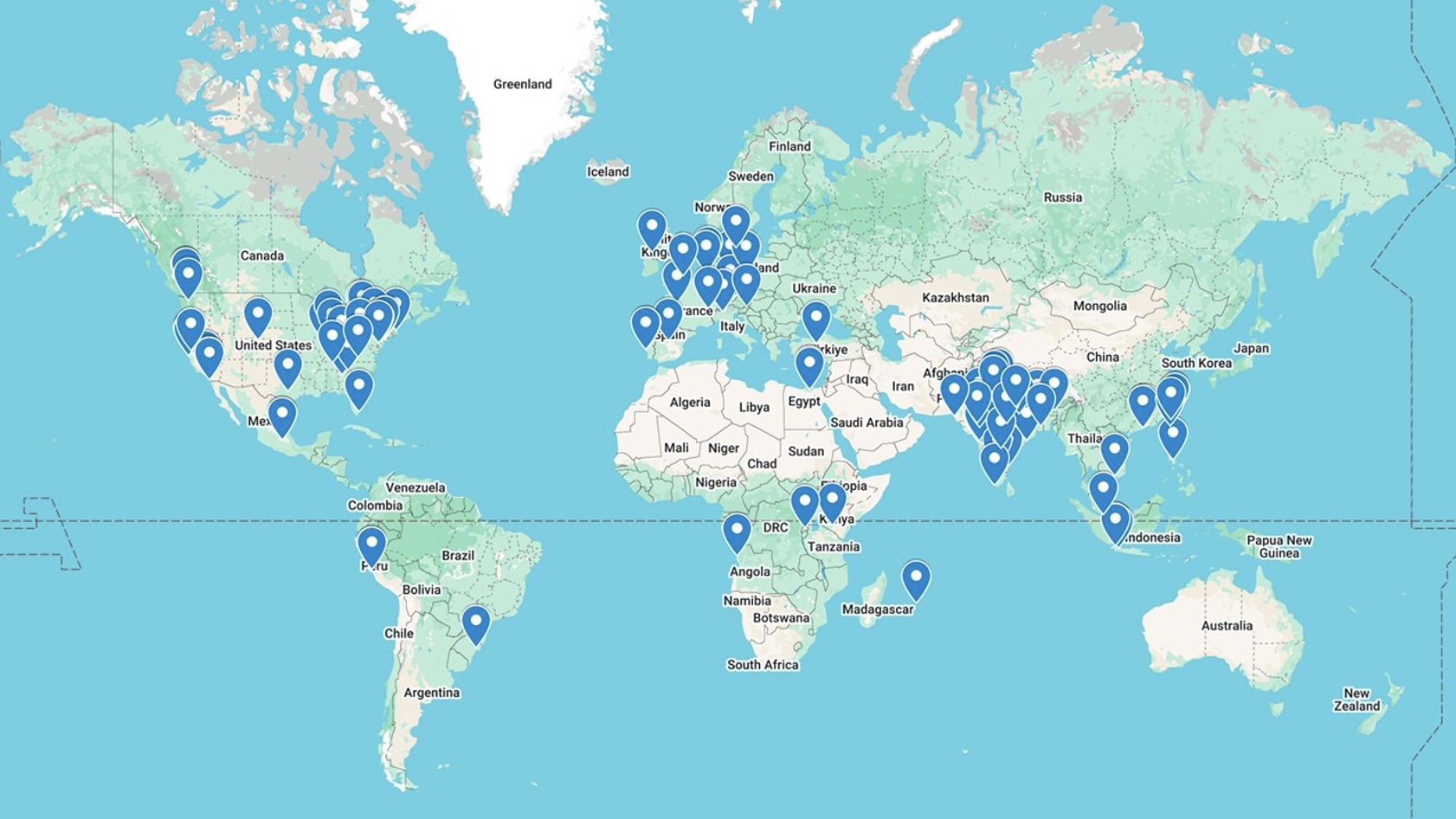
Map of Stanford Center on Longevity Design Challenge 2025-2026 Submissions
Theme: Prevention by Design: Creating Healthy Lifestyles for Long Lives
This year’s theme was selected to align with the Stanford Center on Longevity’s New Map of Life initiative, which seeks to build a society that better supports century-long lives by shifting focus upstream toward prevention. As populations age and chronic conditions become more prevalent, preventive health through lifestyle factors such as nutrition, physical activity, cognitive engagement, and social connection play a critical role in enabling people to live longer, healthier lives.
Through this theme, the Longevity Design Challenge highlights how thoughtfully designed products, services, and systems can make healthy choices easier, more accessible, and more sustainable across different life stages and social contexts.
Finals Date: April 14, 2026
The Finals will take place on April 14, 2026, at Stanford University’s Li Ka Shing Center. During this exciting event, finalist teams will present their innovative designs, competing for the $10,000 first prize.
The Finals are open to the public, offering a unique opportunity to engage with groundbreaking student-designed solutions that reimagine preventive health and healthy living for long lives. For those unable to attend in person, recordings of the event will be made available afterward.
The Stanford Center on Longevity warmly invites students, professionals, and the general public to join us on April 14, 2026, to celebrate innovation, creativity, and prevention by design.
About the Challenge
Since its launch in 2013, the Stanford Center on Longevity Design Challenge has encouraged students to design products and services that improve quality of life for people of all ages. Each year, the competition is made possible by the generous sponsorship of leading organizations and individuals.
Phase 1 Judges